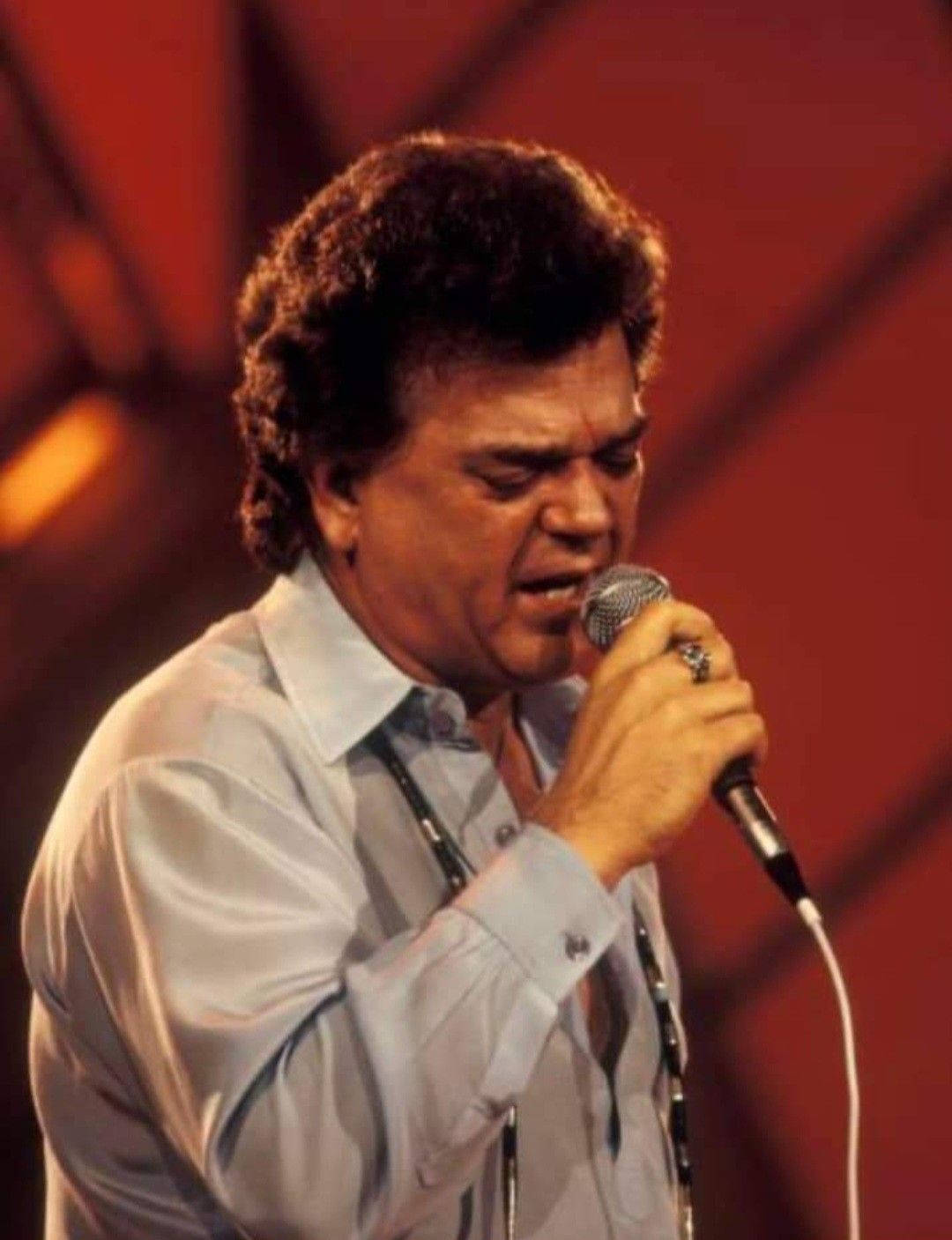
Some of the most famous words in country music were never sung. When fans think of Conway Twitty, they hear a low, unhurried voice saying hello before the band even gets going. That moment almost didn’t happen, and the song around it nearly never made it to a record at all.
From Harold Jenkins to Conway Twitty
Conway Twitty was born Harold Lloyd Jenkins on September 1, 1933, in Friars Point, Mississippi. When he needed a stage name, he found one on a map. He took “Conway” from Conway, Arkansas, and “Twitty” from Twitty, Texas. Years later he confirmed the story on national television, and the name stuck for the rest of his life.
His first big success was not in country music at all. In 1958, Conway Twitty topped the charts with the rock and roll ballad “It’s Only Make Believe.” He had the hair, the suits and the screaming crowds. But the music he had grown up loving was country, and by 1965 he had walked away from rock and roll to chase it.
A Song Waiting in the Wings
According to one account, Conway Twitty wrote “Hello Darlin'” during his rock and roll years and then put it aside, because there was no place for it in the music he was making at the time. Once he moved to country, the old song finally had a home.
He recorded it on November 18, 1969, at Bradley’s Barn in Mount Juliet, Tennessee, with the legendary producer Owen Bradley. Conway Twitty reportedly wasn’t happy with the way he sang the opening line. Owen Bradley offered a simple fix: don’t sing it. Just say it.
That one change gave the record its unforgettable opening. The song begins with a man speaking quietly, almost privately, to someone he has not seen in a long time. It sounds less like a performance and more like a conversation, and listeners felt they were overhearing something real.
Four Weeks at the Top
Decca Records released “Hello Darlin'” on March 23, 1970. By early summer it had reached No. 1 on Billboard’s country chart, and it stayed there for four weeks. It also crossed over to the pop chart and reached No. 2 on the Canadian country chart. When the year was over, it stood as the No. 1 country song of 1970.
More importantly, it became the song people connected to Conway Twitty above everything else. From then on he used it to open his concerts. The lights would come up, the crowd would settle, and the first thing they heard was that spoken greeting. For fans, it meant the show had truly begun.
A Hello That Reached Space
In July 1975, the United States and the Soviet Union carried out the Apollo–Soyuz Test Project, when American astronauts and Soviet cosmonauts met in orbit. It was a rare moment of friendship in the middle of the Cold War, and “Hello Darlin'” became part of it.
Conway Twitty did not speak Russian, so he worked with a language professor from the University of Oklahoma and learned the song phonetically, sound by sound. The Russian version was called “Privet Radost,” and it was played during the mission as a gesture of goodwill. He later said, “That song was played in Russian all around the world.”
Other Voices, Same Song
Other artists wanted their turn with it. Loretta Lynn, his longtime duet partner, recorded “Hello Darlin’,” and so did Charley Pride, Lynn Anderson, Charlie Rich, Bobby Bare and Wanda Jackson. George Jones recorded it in 1972 and again in 1993. Even so, no cover ever replaced the original. Everyone knew whose hello it really was.
The Last Hello
On June 5, 1993, Conway Twitty died suddenly after falling ill following a show in Branson, Missouri. He was 59 years old. Fans who had heard him open concerts with “Hello Darlin'” for more than two decades now heard the song in a new way. Four months later, George Jones released his tribute version. In 1999, Conway Twitty was inducted into the Country Music Hall of Fame.
Why It Still Matters
“Hello Darlin'” works because it never tries too hard. It is a man admitting that he still misses someone, told in a voice so calm it almost breaks your heart. Owen Bradley’s suggestion to speak instead of sing turned a good song into a signature. For the people who grew up with it, one quiet word is still enough to bring Conway Twitty back into the room.