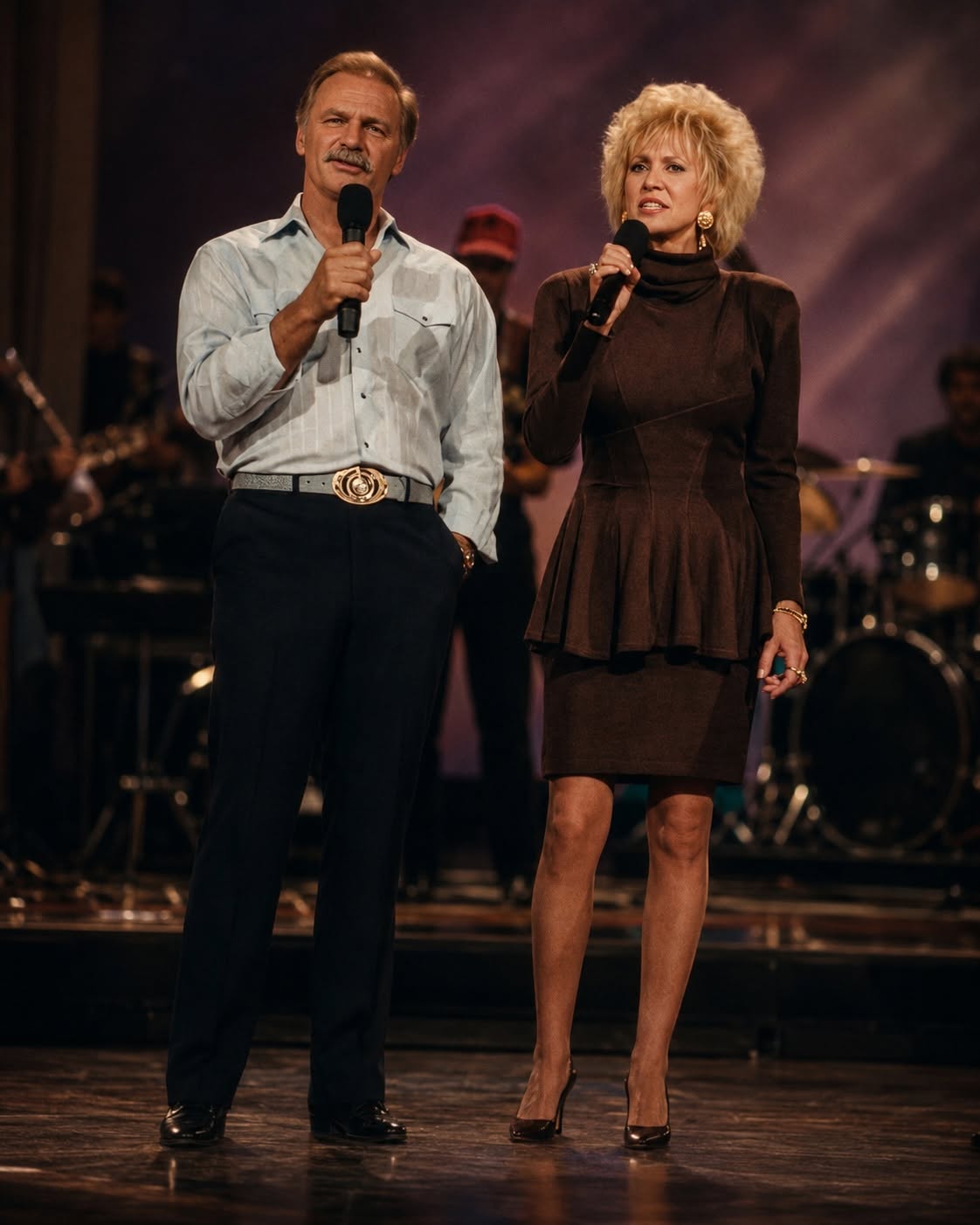
Tammy Wynette reportedly once said that Vern Gosdin was the only other country singer who could hold a candle to George Jones. Coming from a woman who knew George Jones’s voice better than most, that was extraordinary praise.
But one of Vern Gosdin’s most unforgettable recordings carried a story that even longtime country fans might not know. Behind the 1988 classic “Chiseled in Stone” was a family tragedy that happened thirteen years before the song reached the radio.
And the deepest pain behind those words did not begin with Vern Gosdin. It belonged to another songwriter.
From an Alabama Church to Nashville
Vern Gosdin was born on August 5, 1934, in Woodland, Alabama, one of nine children in a struggling farming family. Music was part of daily life. His mother played piano at church, and Vern Gosdin grew up singing gospel with his brothers.
During the 1960s, Vern Gosdin moved into California’s thriving bluegrass and country scene. Alongside his brother Rex Gosdin, Vern Gosdin performed with musicians connected to the emerging West Coast country sound.
But success was neither quick nor guaranteed.
During the 1970s, Vern Gosdin stepped away from performing and operated a glass business in Georgia. It might have seemed that a career in Nashville was slipping further away.
Instead, Vern Gosdin returned to recording before the decade ended. By the 1980s, songs such as “I Can Tell by the Way You Dance,” “Set ‘Em Up Joe,” and “I’m Still Crazy” had established Vern Gosdin as one of traditional country’s most distinctive voices.
Then came “Chiseled in Stone.”
The Tragedy Max D. Barnes Never Forgot
In 1975, Nashville songwriter Max D. Barnes experienced a devastating loss. His 18-year-old son, known as Butch Barnes, died in an automobile accident.
For Max D. Barnes and his family, life changed permanently.
Years later, Max T. Barnes, another son who became a successful country songwriter, recalled the night his father woke him to deliver the terrible news about his brother.
The grief stayed with the family. And although Max D. Barnes continued writing music, that experience became part of the emotional history Max D. Barnes could draw upon as a songwriter.
When Max D. Barnes eventually collaborated with Vern Gosdin on “Chiseled in Stone,” the resulting song told a different story from the actual family tragedy. But the sorrow behind it came from something deeply real.
The Song That Changed Everything
“Chiseled in Stone” follows a man troubled by a relationship who encounters an older stranger in a bar. The older man understands loneliness in a way the younger man has not yet experienced.
As their conversation unfolds, the meaning becomes painfully clear. Losing someone through an argument is not the same as losing someone forever.
The older man’s perspective gives the song its unforgettable emotional weight.
Max D. Barnes had lost a son, while the song’s fictional character mourns a different kind of loss. That distinction matters. The lyrics were not a literal retelling of the accident, but they carried the understanding of grief that Max D. Barnes knew firsthand.
And Vern Gosdin knew how to deliver those words.
There was no need for dramatic vocal tricks. Vern Gosdin sang with a restrained sadness that allowed the story to speak for itself.
A Country Classic Recognized in 1989
Released in 1988, “Chiseled in Stone” reached No. 6 on Billboard’s country singles chart. At the 1989 Country Music Association Awards, Vern Gosdin and Max D. Barnes won Song of the Year for their composition.
For Max D. Barnes, the recognition marked a major songwriting achievement. For Vern Gosdin, it confirmed what devoted listeners had understood for years: few singers could communicate heartbreak with such conviction.
Max T. Barnes later recalled how frequently Vern Gosdin and Max D. Barnes wrote together. Their partnership produced numerous songs, but “Chiseled in Stone” became one of their most enduring accomplishments.
Why the Song Still Matters
Vern Gosdin died on April 28, 2009, at age 74. The recordings remain, and “Chiseled in Stone” continues to hold a special place among fans of traditional country music.
Knowing the story of Butch Barnes does not change the words of the song. But it changes what listeners understand about the people who created it.
Behind a celebrated performance was a songwriter who had experienced a parent’s worst heartbreak, and another songwriter whose voice could carry that emotion to millions of listeners.
That was the remarkable partnership between Vern Gosdin and Max D. Barnes.
And perhaps that is why “Chiseled in Stone” still feels so personal decades later. It was more than a beautifully performed country song. Part of its emotional truth came from a family that had already lived through the kind of loss the music was trying to describe.