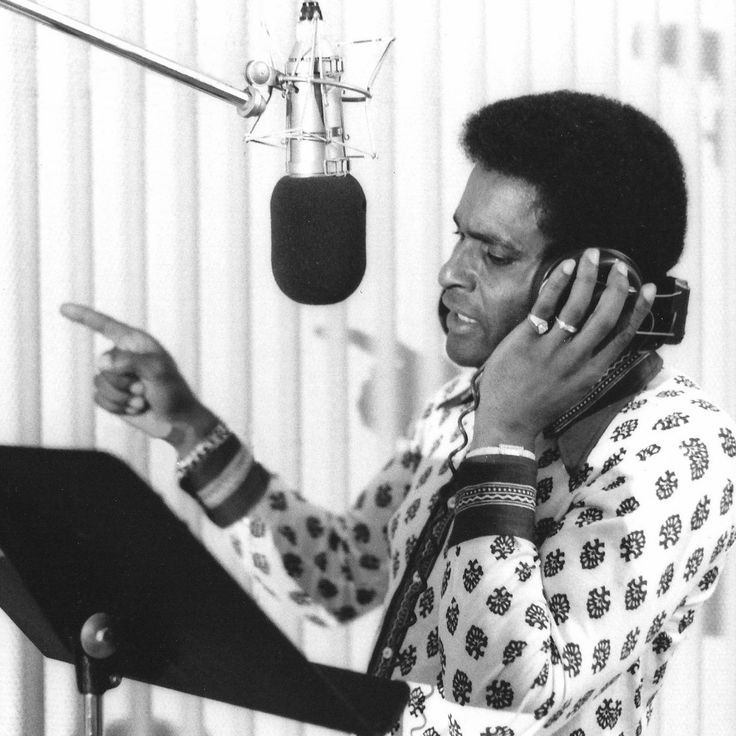
Scroll to the end of the article to hear the song.
The song was “Kiss an Angel Good Mornin’.” It gave Charley Pride the biggest hit of his career in 1971, and almost fifty years later it became the last song he ever sang on a stage. When he died on December 12, 2020, filmmaker Ken Burns, whose PBS series Country Music had told Charley’s story only a year earlier, paid tribute in a few lines. He called Charley a trailblazer who broke down barriers in country music the way his hero Jackie Robinson had in baseball. Then he noted that Charley’s last performance had been this very song, and finished with four words: “Now he is one.”
To understand why those four words hit so hard, you have to go back to a songwriter, a baby girl, and an ordinary morning.
A Reminder at the Door
Ben Peters was a Mississippi native who had built a career writing for other singers. In 1970 he started his own publishing company, Ben Peters Music. Around that time, he and his wife, Jackie, welcomed a daughter named Angela. At home, she was “Angel.”
One morning, as Ben was heading out to work, Jackie stopped him. According to his 2005 obituary, she told him he needed to go kiss his Angel good morning. Ben did more than that. He turned the moment into a song.
What started as a father’s love came out sounding like something else. In the finished song, a man keeps running into old friends who can’t understand why he’s always smiling. His answer is his secret to happiness: start the day by showing the woman you love what she means to you, think of her while you’re away, and love her with everything you’ve got when you get back home. The angel in the title was a baby girl. The world would hear a wife.
The Singer Who Couldn’t Wait
Charley Pride didn’t write the song, but he knew what he had the moment he heard it. He later told Songfacts that he “couldn’t wait to get into the studio.” Produced by Jack Clement, it became the lead single from Charley Pride Sings Heart Songs.
It went to No. 1 on the country chart, his eighth chart-topper, and stayed there for five weeks. It also crossed over to No. 21 on the Billboard Hot 100, the only time Charley reached the pop Top 40, and made the Top 10 on the Adult Contemporary chart. Ben Peters won the Grammy for Best Country Song for it, and Charley went on to record dozens more of his songs.
For the next five decades, “Kiss an Angel Good Mornin'” was Charley’s signature. Couples danced to it. Radio never let it go. In 2024, it was inducted into the Grammy Hall of Fame.
One Last Time on a Nashville Stage
On November 11, 2020, Charley Pride received the Willie Nelson Lifetime Achievement Award at the CMA Awards in Nashville. He was 86. That night he sang “Kiss an Angel Good Mornin'” with Jimmie Allen, a young Black country artist who spoke openly about how much he owed to the man beside him.
Nobody watching knew it would be his last performance. About a month later, on the morning of December 12, Charley died in Dallas of complications from COVID-19.
The Night the Opry Sang It Back
The news broke as the Grand Ole Opry was getting ready for its Saturday night show. The Opry placed a white ribbon on Charley’s name and dedicated the evening to him. Charley had been an Opry member since 1993.
Chris Young closed the broadcast. “Sadly, today we learned of the passing of a true country icon, Mr. Charley Pride,” he told the crowd. Then he sang “Kiss an Angel Good Mornin'” while a slideshow of photos of Charley played behind him.
“We’re gonna miss you, Charley,” Young said as the song ended.
Across social media that day, artists remembered him. John Rich wrote that the song was one of his first memories of country music. And Ken Burns wrote the four words that changed how many fans heard it.
The Same Words, a Different Song
Ben Peters died in 2005 and never saw what his song became. He wrote it about a baby he kissed on his way out the door. Charley Pride sang it as a husband’s simple secret. Then, in December 2020, the lines about thinking of someone while they’re gone sounded like they were about Charley himself.
Which song can you no longer hear the same way?