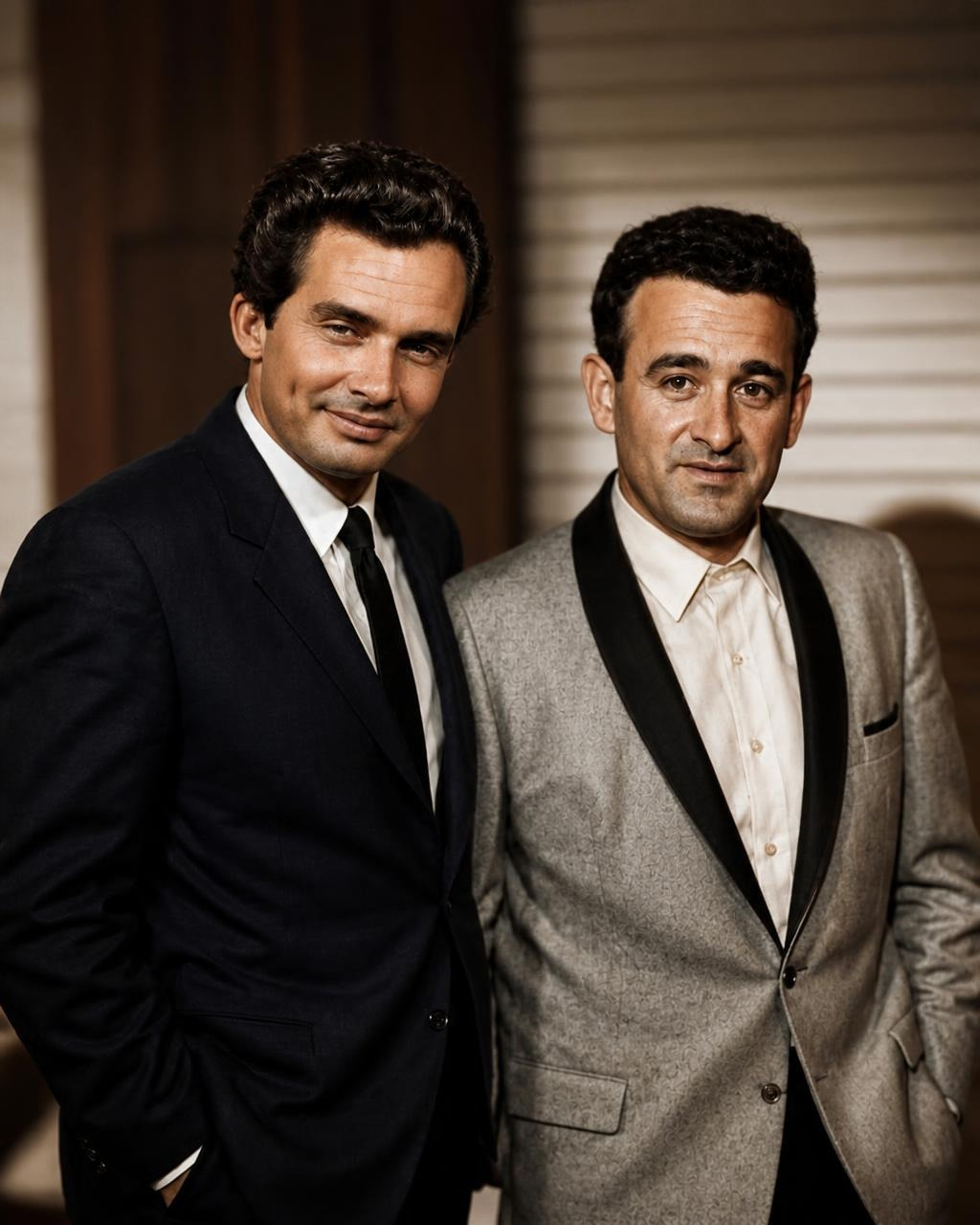
Before Fame Found Him, Merle Haggard Was Still Learning the Room
In the early 1960s, Merle Haggard was not yet the name America would later recognize. He had come out of prison in 1960 and returned to Bakersfield, California, where life was ordinary in the hardest possible way. He took manual labor jobs, including ditch digging, and worked for his brother’s electrical business. At night, he kept music alive in clubs and bars, hoping that a voice like his could still find a place in the world.
That hope took him to Las Vegas in 1962, where Wynn Stewart was already making his own mark as a country singer and a key figure in the Bakersfield sound. Stewart’s style helped define the sharper, more driving West Coast country scene, and he had enough reputation by then to matter to younger musicians trying to be heard. When Haggard ended up singing in Stewart’s orbit, Stewart listened closely. The performance was strong enough to earn Haggard a job as Stewart’s bass player.
A Small Job, A Big Turning Point
For about six months, Merle Haggard stood behind Wynn Stewart instead of stepping out front. He was part of the band, part of the background, and still a long way from the legend he would become. But those months mattered. Haggard was absorbing everything: the phrasing, the discipline, the confidence, and the hard edges of a sound built for working people.
Then came the song that changed the direction of his career. Haggard heard Wynn Stewart’s “Sing a Sad Song” and wanted to record it. Stewart agreed, and that simple act of trust became one of the most important early breaks in Haggard’s life.
The First Hit That Opened the Door
Haggard recorded “Sing a Sad Song” for Tally Records in 1963. The single began to catch on as 1963 turned into 1964, and it became his first national country hit, reaching No. 19. It was not a superstar explosion. It was something more valuable for a young artist trying to survive: proof.
Proof that the voice could carry. Proof that the songs could travel. Proof that the man who had once been a prison inmate and then a bass player could also stand at the microphone and command attention.
More success followed. In 1965, “(My Friends Are Gonna Be) Strangers” pushed him into the Top 10 and helped establish him as a rising force in country music. The transformation was no longer theoretical. Merle Haggard was becoming Merle Haggard.
Wynn Stewart did not create Merle Haggard’s legacy. But Wynn Stewart recognized talent early, and that kind of recognition can change a life.
Looking back, the story is remarkable not because it was sudden, but because it was gradual. Merle Haggard did not leap from prison to legend in a single moment. He worked, waited, played bass, listened closely, and earned the chance to be heard. Wynn Stewart’s decision to hand him “Sing a Sad Song” did not make Haggard famous on its own. But it gave him one of the first real steps toward the career that would follow.
Before America knew his name, Merle Haggard was still learning the room. In Las Vegas, behind Wynn Stewart, that room finally started to open.