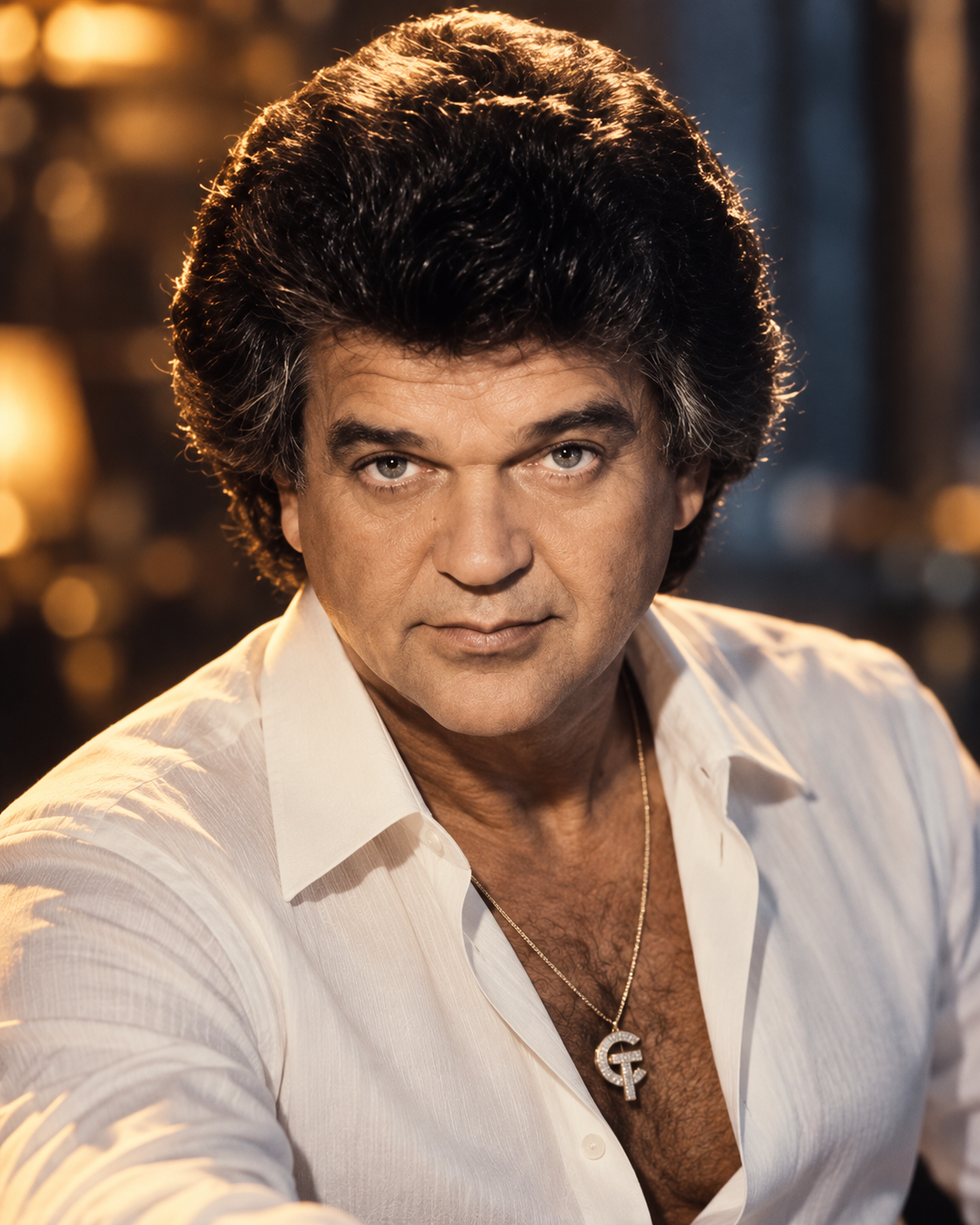
Some songs open with a guitar lick. Some open with a drumbeat. But one of the most beloved country records of all time opens with a man simply speaking two soft words, almost like he’s leaning across a table toward someone he hasn’t seen in years. That song is “Hello Darlin’,” and the man was Conway Twitty.
When it reached radio in 1970, nobody could have guessed that a quiet, half-spoken greeting would become the calling card of an entire career. But that is exactly what happened.
A Rock and Roll Star Who Came Home to Country
Before he was the velvet-voiced king of country heartbreak, Conway Twitty was Harold Lloyd Jenkins, a boy from Friars Point, Mississippi, who grew up listening to the radio and dreaming big. In 1958 he became a rock and roll sensation with “It’s Only Make Believe,” a smash that put him on stages across America and around the world.
Plenty of artists would have chased that sound forever. Conway Twitty didn’t. By the mid-1960s, he felt the pull of the music he had loved all along. He turned toward country, and many people in the industry doubted him. Some disc jockeys reportedly refused to play his records, convinced a former rock and roller didn’t belong on country radio.
He kept going anyway. Slowly, song by song, he earned his place. And then came the record that changed everything.
The Song That Started With a Whisper
Conway Twitty wrote “Hello Darlin'” himself. The story behind it is simple and universal: a man runs into a woman he once loved and lost. He is polite. He asks how she’s been. He tries to sound fine. But every word carries the weight of everything he never said and everything he still feels.
What made the song unforgettable was the way it began. Instead of launching into a melody, Conway Twitty spoke the opening greeting in a low, intimate voice. It felt less like a performance and more like overhearing a private moment. Listeners leaned in. Women swooned. Men who never talked about their feelings suddenly found themselves turning up the radio.
Recorded with legendary Nashville producer Owen Bradley, the song climbed to number one on the Billboard country chart and stayed there for weeks. It became one of the defining country records of 1970 and, in time, one of the most recognizable songs in the genre’s history.
It was never about a big voice or a big production. It was about a feeling every single person who has ever loved and lost could understand.
From Nashville to Outer Space
Here is a part of the story many fans still find hard to believe. In 1975, during the Apollo-Soyuz Test Project, when American astronauts and Soviet cosmonauts met in orbit for the first time, music was part of the friendly exchange between the two crews. Conway Twitty recorded a version of “Hello Darlin'” partly in Russian as a gesture of goodwill for the cosmonauts.
Think about that for a moment. A song that started as a quiet greeting to a lost love ended up floating above the Earth, carrying a message of friendship between two nations that had spent decades as rivals. Few country songs have ever traveled that far, in any sense of the word.
The Greeting He Gave His Fans Every Night
Over the years, “Hello Darlin'” became more than a hit. It became the way Conway Twitty greeted his audience. Fans would wait for that familiar opening, and when it came, arenas erupted. He went on to record dozens of number one songs, including classic duets with Loretta Lynn, but this was the one that felt most like him.
He even built his own entertainment complex, Twitty City, in Hendersonville, Tennessee, where fans could visit and feel close to the man who had sung to them for so long.
Saying Goodbye
On June 5, 1993, Conway Twitty passed away at the age of 59. The news hit country fans hard. For many, it felt like losing an old friend who had been there through first dances, breakups, long drives, and quiet nights at home.
And yet, every time “Hello Darlin'” plays today, something remarkable happens. That soft voice comes through the speakers, and for a few minutes, Conway Twitty is right there again, saying hello.
Why It Still Matters
More than fifty years later, “Hello Darlin'” endures because it captures something we all recognize: the moment you see someone from your past and realize part of your heart never moved on. Conway Twitty didn’t need to shout it. He just said hello, and the whole world understood.
Do you remember the first time you heard “Hello Darlin'”? For millions of fans, it’s a memory that never fades.