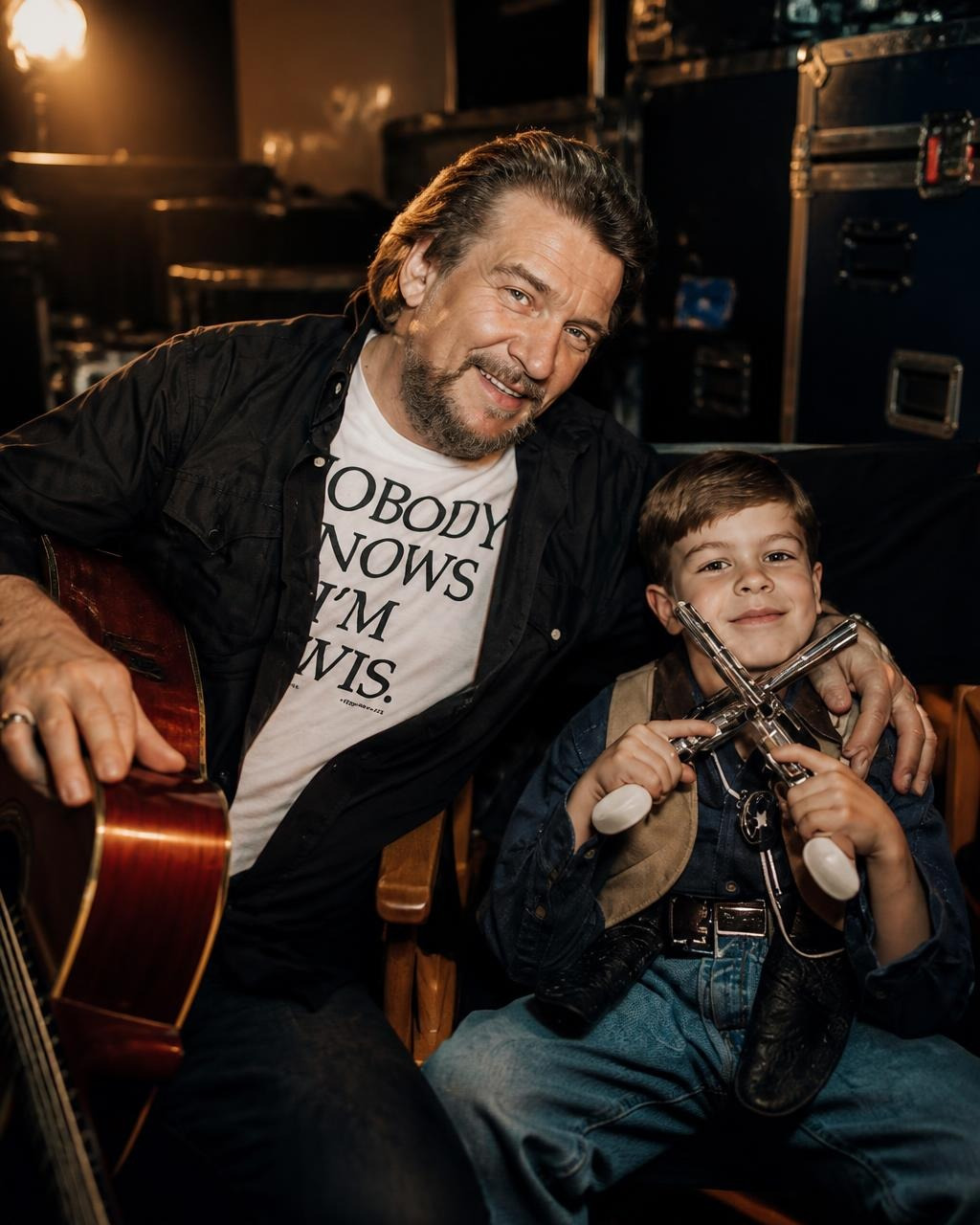
When Shooter Jennings Returned to the Tapes: The Story Behind Waylon Forever
By the time Shooter Jennings walked back into the studio in 2006, his father had already been gone for years. Waylon Jennings died on February 13, 2002, at 64, leaving behind a legacy that had already reshaped country music. But some recordings were still waiting for a final life of their own. One of them would become Waylon Forever.
A Record That Started Long Before the Release
Years earlier, Waylon Jennings and Shooter Jennings had worked on a small group of songs together. Among them were new versions of Lonesome, On’ry and Mean, Waymore’s Blues, and Ain’t Livin’ Long Like This. The sessions never turned into a finished album, and life moved on. Shooter Jennings built his own career, his own sound, and his own path.
Then, in 2006, he returned to those old tapes.
Building Around Waylon Jennings’ Voice
This was not a project about replacing Waylon Jennings. His voice was already there, preserved on the recordings. Instead, Shooter Jennings and his band, the .357s, added new backing tracks around those original vocals. Producer Dave Cobb helped bring the material together, shaping the unfinished pieces into something that could finally be heard as a complete record.
For Shooter Jennings, the experience carried a weight that went beyond the usual demands of studio work. It was personal. It was emotional. It was the chance to step back into a conversation that had been paused by death.
It felt like I was getting to finish that record for him.
That feeling gives the album its heart. Waylon Forever was not simply a posthumous release. It was a son working side by side with the sound of his father, making sure the songs could finally stand on their own.
The Release of Waylon Forever
In October 2008, Waylon Forever was finally released with eight songs. By then, Waylon Jennings had been gone for more than six years. The album arrived as both a tribute and a continuation, carrying the rough edges, honesty, and outlaw spirit that had always defined Waylon Jennings’ music.
What made the project so moving was its intimacy. Shooter Jennings was not merely protecting his father’s legacy from a distance. He was inside it, helping finish something that had begun in a different era, when he was still a teenager and Waylon Jennings was still alive to sing.
More Than a Family Keepsake
For listeners, Waylon Forever became a rare kind of record: unfinished, but not abandoned; nostalgic, but still alive. It carried the sound of two generations meeting across time, one voice already set, the other answering with care.
In the end, the album stands as something quiet and extraordinary. Inside that studio, Shooter Jennings was not only preserving his father’s music. For one unfinished record, he had been given the rare chance to work beside Waylon Jennings again.