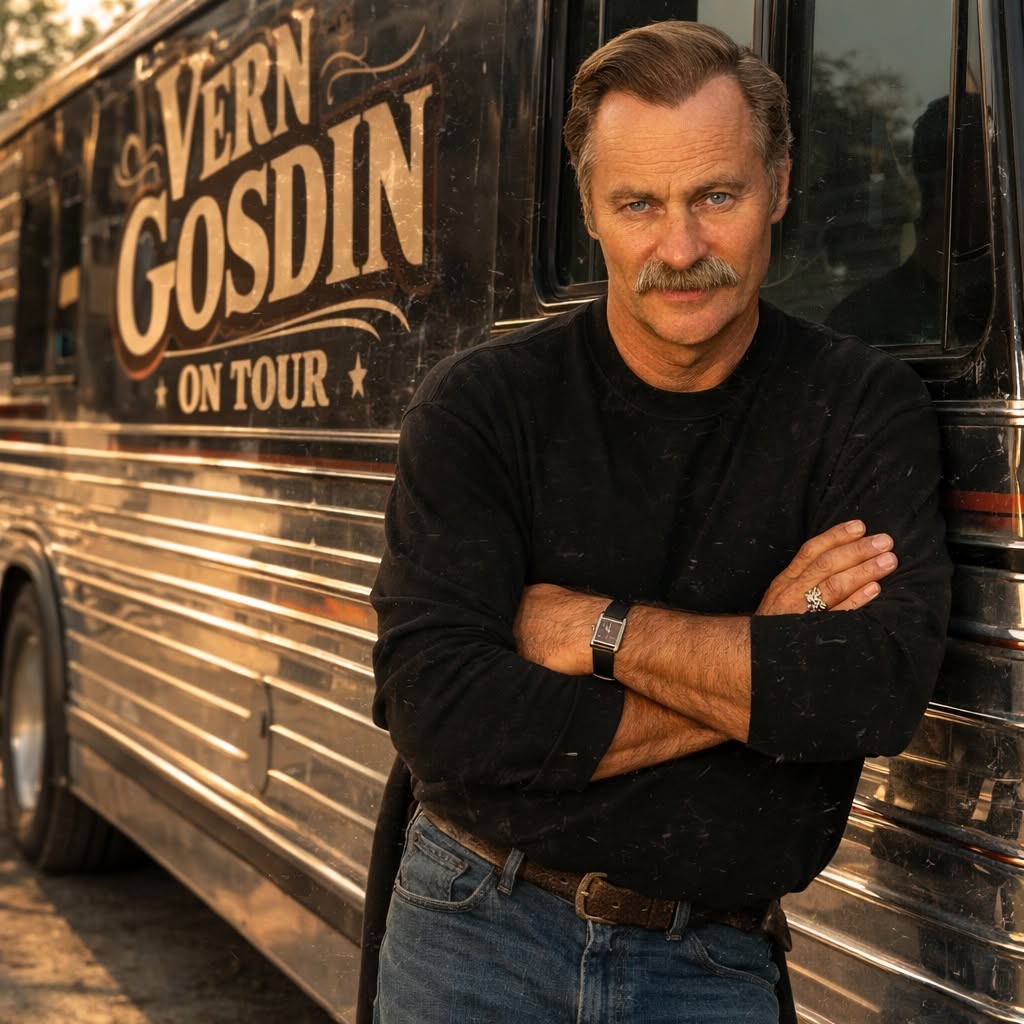
Some country songs make you tap your foot. Others make you pull the truck over to the side of the road. In 1988, Vern Gosdin released one that made grown men do exactly that. It was called Chiseled in Stone, and more than thirty-five years later, people still say they can’t get through it without a lump in their throat.
The Voice Nashville Almost Forgot
By the late 1980s, Vern Gosdin had already lived a long musical life. Born in Alabama in 1934, he had sung bluegrass and harmonies in California and recorded with his brother Rex as the Gosdin Brothers, and he scored country hits in the late 1970s and early ’80s. But Nashville moves fast, and by the middle of the decade a lot of people figured his best days were behind him.
Then Vern Gosdin signed with Columbia Records, and everything changed. Fans called him “The Voice,” and they weren’t exaggerating. He didn’t oversing. He didn’t show off. He just told the truth in a deep, worn voice that sounded like it had lived every word.
A Song Born From a Father’s Grief
The story of Chiseled in Stone really begins years earlier, in the life of songwriter Max D. Barnes. In 1975, his 18-year-old son was killed in a car accident. It was the kind of loss no parent ever recovers from completely.
His surviving son, Max T. Barnes, who later became a Nashville songwriter himself, has spoken about that night.
“I remember the night my dad woke me and told me about my brother.”
The song is not a direct retelling of that tragedy. But when Max D. Barnes sat down with Vern Gosdin to write it, he was drawing on a grief he understood better than anyone should. You can hear it in every line.
The Story Inside the Song
The song tells a simple story. A young man has a fight with his wife and storms out of the house. He ends up at a bar, feeling sorry for himself and convinced nobody has ever been as lonely as he is.
Then an old man sitting nearby starts to talk. He has lost the woman he loved, and the only place he can visit her now is a cemetery. Quietly, he tells the young man that he doesn’t know the first thing about loneliness yet. Real loneliness, the old man says, is the kind you can read on a headstone.
The young man hears it. He finally understands what he has been taking for granted. And he heads home to the woman who is still waiting for him.
No big chorus or flashy production gets in the way of that message. Producer Bob Montgomery kept the arrangement simple and let Vern Gosdin’s voice carry the weight.
How America Responded
Columbia released Chiseled in Stone as a single on August 27, 1988. It climbed to No. 6 on the Billboard Hot Country chart and reached No. 3 in Canada. Those are strong numbers, but they don’t tell the whole story.
The song spread the way the best country songs always have. People heard it on late-night radio and on truck-stop jukeboxes, and they kept talking about it. Husbands called their wives from pay phones. Widows wrote to radio stations. Grown sons played it for their fathers and watched them go quiet.
In 1989, the Country Music Association named Chiseled in Stone its Song of the Year. It also earned a Grammy nomination for Best Country Song. For Vern Gosdin, who had waited decades for that kind of recognition, it meant everything.
Why So Few Artists Have Covered It
Plenty of classic country songs get recorded again and again. This one mostly hasn’t. Many fans believe the reason is simple: very few singers can deliver it the way Vern Gosdin did. It takes a voice that sounds like it has already lost something.
The Lesson That Never Gets Old
Vern Gosdin passed away in 2009, but his song is still doing what it was written to do. It still reminds people to go home, make the phone call, and say the thing they have been too proud to say.
Maybe that’s why so many people still remember exactly where they were when they first heard it. Maybe it reminds you of a parent who used to play it in the kitchen or the old pickup truck. Maybe someone you loved isn’t here to hear it with you anymore.
If that’s the case, play it once more tonight. Then go and hug the people who are still here.
Who in your life does Chiseled in Stone remind you of?