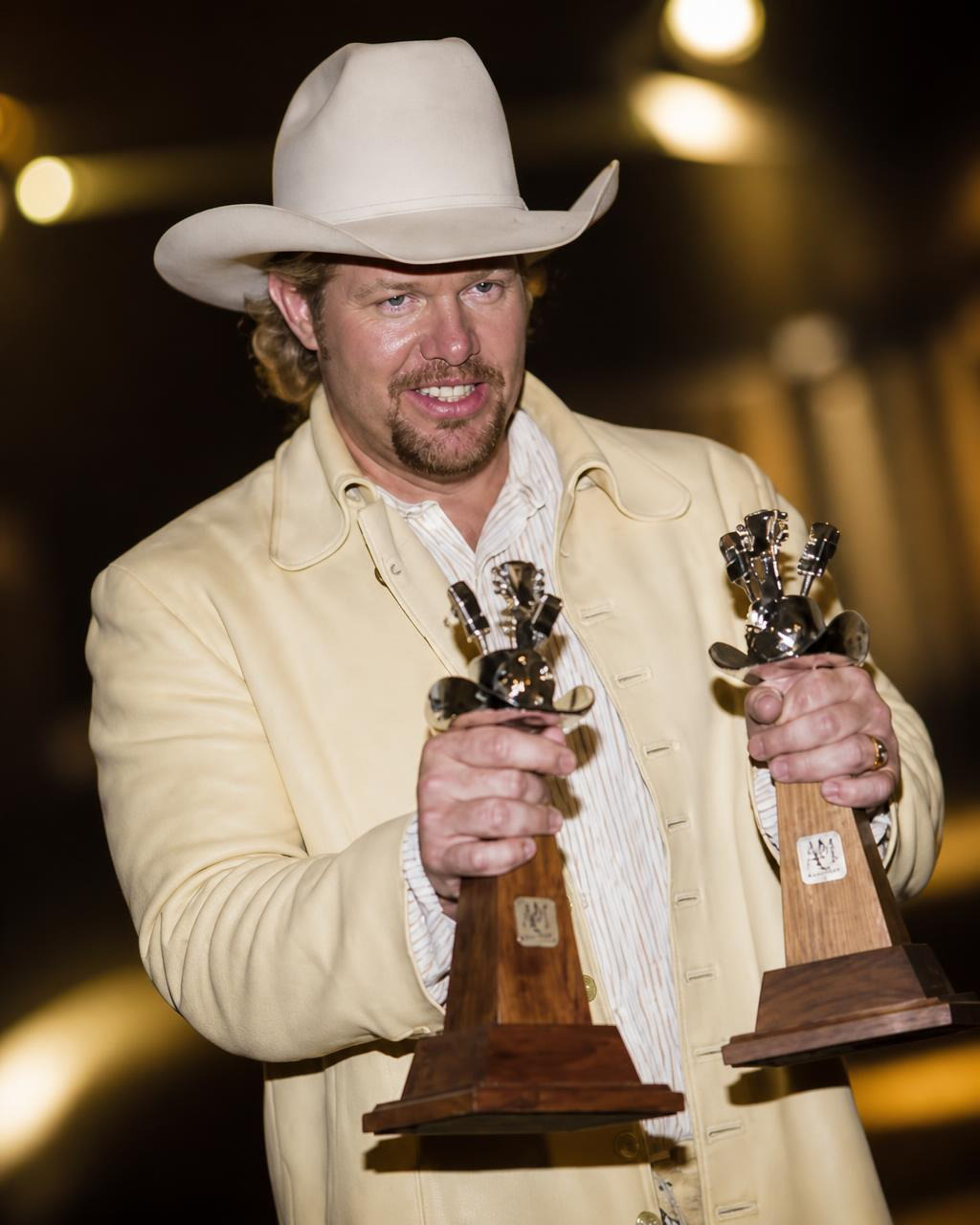
Toby Keith and the Long Wait Behind His First Big Wins
Toby Keith’s rise did not begin in a glittering Nashville office or with an overnight hit. It began in Oklahoma, where he worked oil fields by day and sang at night. At 20, he was already fronting the Easy Money Band, carrying his voice through bars and dance halls across Oklahoma and Texas long before country music knew his name. The work was steady, the money was not, and the dream kept moving forward one small stage at a time.
For much of the 1980s, Toby Keith built his reputation the hard way. He played the kind of rooms where the crowd was close enough to hear every lyric and every breath. He learned how to hold attention, how to win over a room, and how to keep going when success still felt far away. When the oil business collapsed, he lost the steady work that had supported him. That moment changed everything. Music was no longer a side pursuit. It became the only path he trusted.
His breakthrough finally arrived in 1993, when “Should’ve Been a Cowboy” went to No. 1 and his debut album sold more than a million copies. The industry could no longer ignore him. Fans filled the seats. Radio kept the songs in heavy rotation. Still, the major trophies were slow to follow. The recognition was real, but it did not arrive at the same pace as the commercial success.
That gap seemed to sharpen Toby Keith’s resolve. He kept writing, recording, and pushing his own sound forward. Then came How Do You Like Me Now?!, the album built around the title track that his former label had refused to release. It became a statement as much as a hit: a reminder that persistence can outlast doubt.
The Night the Waiting Ended
On May 9, 2001, Toby Keith walked into the Academy of Country Music Awards with an album that carried the weight of everything before it. That night, he won Album of the Year and Top Male Vocalist. For an artist who had spent years proving himself one room, one song, one crowd at a time, the moment mattered deeply.
“I’ve waited a long time for this. Nine years!”
The line landed because it was true. Nine years since Nashville had handed him a recording career. Nearly 20 years since the young oil-field worker first began singing in Oklahoma bars. The trophies honored one album, but they also honored the long road beneath it: the dance halls, the setbacks, the missed chances, and the stubborn belief that his voice deserved to be heard.
Toby Keith’s story was never just about one hit or one award show. It was about endurance. By the time the applause reached him that night, the victory already felt larger than the stage. It belonged to every mile he had driven, every late night he had played, and every year he had waited for country music to catch up with the artist he had already become.