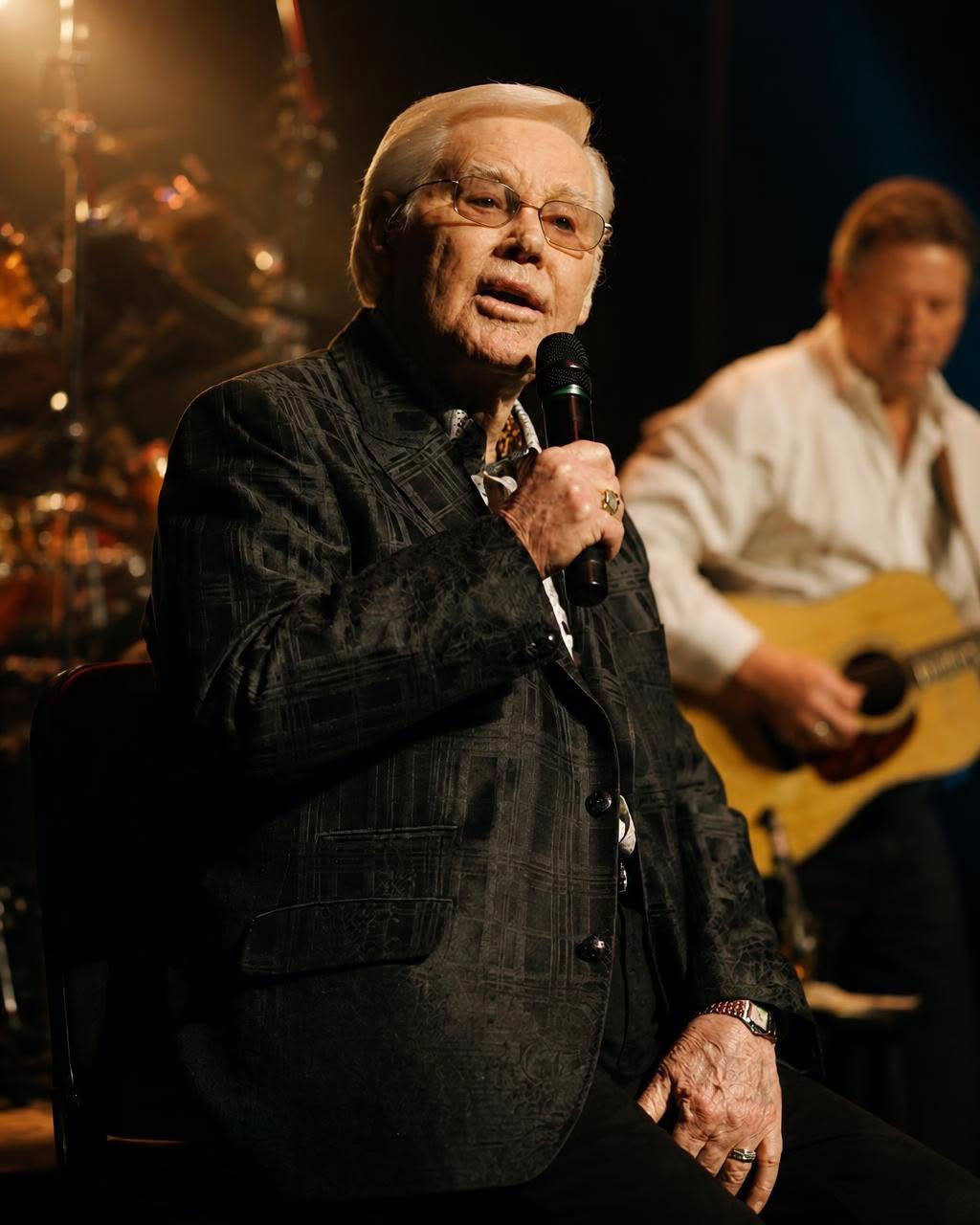
George Jones and the Day Nashville Said Goodbye
On May 2, 2013, the Grand Ole Opry House in Nashville became more than a stage. It became a place of farewell, memory, and shared grief. Fans began lining up the day before, hoping to be part of a public goodbye for George Jones, the country legend whose voice had shaped generations of listeners. Nearly three hours long and broadcast around the world by satellite and online, the service drew family, friends, fellow artists, and thousands of admirers. George Jones had been an Opry member since 1956, and on this day the circle he helped define held his memory with deep respect.
A room full of voices, and one missing voice
The service opened with Tanya Tucker performing The Old Rugged Cross, then stepping back from the microphone with a simple line that carried the weight of the morning: “I’m gonna miss you, Possum.” Ronnie Milsap followed with When the Grass Grows Over Me and called it the saddest song he had ever sung. The words did not feel polished or distant. They felt raw, like people trying to speak carefully because the feeling in the room was too large for ordinary language.
Former First Lady Laura Bush also spoke, remembering George Jones with warmth and admiration. Her remarks reflected what many in the room already knew: George Jones was not only a giant in country music, but also a voice that felt personal to the people who grew up with his songs.
Music carried the grief
Later, Vince Gill stood beside Patty Loveless for Go Rest High On That Mountain. The performance became one of the most emotional moments of the day. Vince Gill lost his voice to grief, and Patty Loveless carried the song forward. It was not a performance designed to impress. It was a moment of honest sorrow, the kind that happens when music becomes the only language strong enough to hold a loss.
Then Alan Jackson closed the service with He Stopped Loving Her Today, the song forever tied to George Jones. Standing on the same wooden circle where George Jones had sung it for the Opry, Alan Jackson removed his white hat and held it over his heart. The gesture said as much as any speech could. The room answered with silence, then memory, then love.
The final walk past the stage
As pallbearers carried the casket past the stage, the speakers played When the Curtain Falls. It was a quiet ending to a day that had already carried so much emotion. For fans, the service was not just a news event or a celebrity farewell. It was a chance to honor a singer whose voice had lived inside their lives for decades.
George Jones left behind more than hit songs. He left a standard for honesty in country music, and a sense that sorrow, humor, and tenderness could all live in the same song. On that day at the Grand Ole Opry House, Nashville did not just mourn a star. It said thank you to a man whose music had become part of American memory.