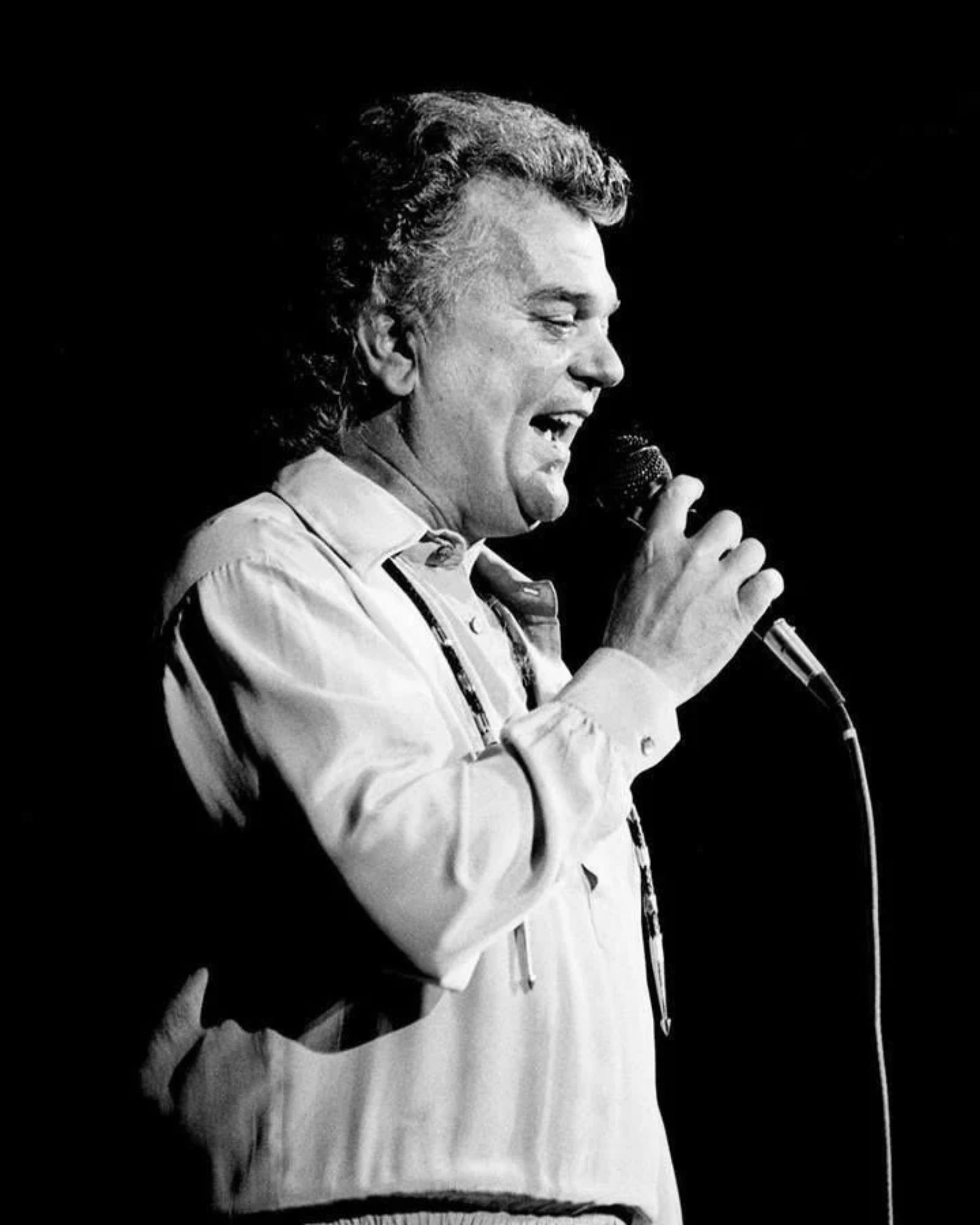
In 1973, Conway Twitty received a phone call from a friend who worked as a country radio disc jockey. The conversation began with news Conway hadn’t expected.
The station couldn’t play his new record.
For a singer who had already become one of country music’s biggest stars, that was surprising enough. But the reason behind the decision puzzled Conway even more.
Radio programmers believed the song’s lyrics were too suggestive for their listeners.
Conway Twitty had written the song himself. And as far as he was concerned, people were hearing something very different from what he had intended.
The Song That Caused the Controversy
The record was “You’ve Never Been This Far Before,” released in July 1973.
By then, Conway Twitty had built a remarkable career singing about love, heartbreak, marriage, and complicated relationships. His unmistakable voice and emotional delivery made him one of the most recognizable singers in country music.
But this particular song pushed some radio stations beyond what they were comfortable broadcasting.
Written by Conway Twitty and produced by Owen Bradley, the recording told the story of a man and a woman sharing an emotionally uncertain moment. There was affection, hesitation, and the awareness that their relationship was entering unfamiliar territory.
Some listeners heard tenderness and vulnerability. Others heard something considerably more provocative.
And one particular line caused much of the trouble.
The Eight Words That Made Radio Programmers Nervous
Years later, Conway Twitty recalled the controversy in comments preserved among his archival publicity materials.
The lyric that had disturbed radio programmers was:
“As my trembling fingers touch forbidden places”
To certain broadcasters in 1973, those words suggested something too intimate for country radio.
But Conway Twitty had a different explanation.
He believed the song was about a woman crossing an emotional boundary after a troubled marriage. She was entering a new relationship, and even an innocent gesture could carry an enormous emotional weight.
In Conway’s interpretation, something as simple as holding hands or putting an arm around someone could feel forbidden under those circumstances.
That was the meaning he wanted listeners to understand.
In a 1974 interview published in Country Music magazine, Conway explained that the woman in the song had previously remained faithful to her husband but was now separated from him. She was nervous because she had never experienced this kind of closeness with another man.
Conway considered the controversial lyric one of the tenderest he had written.
Whether listeners agreed with that interpretation was another matter. Once the recording reached radio stations, its meaning was no longer entirely in Conway’s hands.
Some Stations Refused the Song, but the Public Had Other Plans
Despite the objections, “You’ve Never Been This Far Before” became a major success.
On September 8, 1973, the song reached No. 1 on Billboard’s Hot Country Singles chart. It remained at the top for three consecutive weeks.
Even more remarkably, the record crossed beyond country music.
It climbed to No. 22 on the Billboard Hot 100, introducing Conway Twitty’s country sound to a broader pop audience.
By the end of the year, Billboard had recognized the recording as its top country single of 1973.
For a song that some radio stations considered unsuitable for airplay, that was quite an achievement.
The controversy had not prevented listeners from embracing the record.
Why the Story Still Matters More Than 50 Years Later
Today, “You’ve Never Been This Far Before” remains an important part of Conway Twitty’s musical legacy.
It also reminds us of an era when radio programmers had enormous influence over which songs audiences could hear.
A single line could turn an otherwise successful record into a source of debate. What one listener considered improper, another might understand as an honest portrayal of complicated human feelings.
That disagreement was at the heart of Conway Twitty’s experience in 1973.
He hadn’t set out to shock country music audiences. He believed he had written a tender story about two people facing a moment that frightened them both.
Some radio stations heard something else entirely.
Yet more than half a century later, listeners still remember the song, its unmistakable arrangement, and Conway’s deeply personal delivery.
And perhaps that is the most interesting part of the story: the very lyric that some broadcasters considered too daring was one Conway Twitty believed expressed the song’s tenderness.
What began with an unexpected phone call in 1973 became one of the most memorable chapters in Conway Twitty’s long country music career.