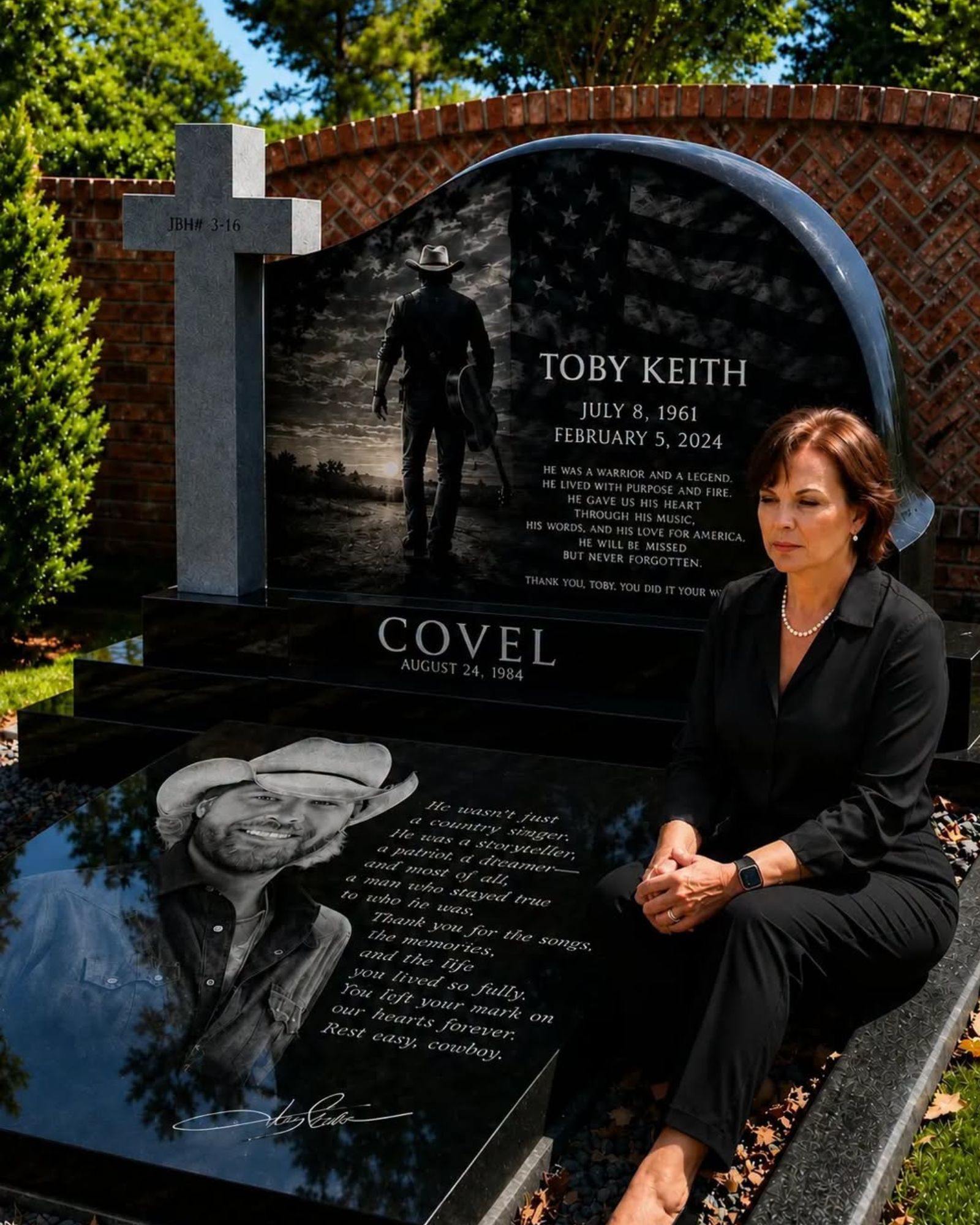
Strangers Still Stop Toby Keith’s Widow on the Street to Tell Her They Miss Him
Sometimes grief does not arrive in private. It steps out into the open, in grocery-store parking lots, on sidewalks, and in the middle of ordinary days. That is what Tricia Covel has been living with since Toby Keith died on February 5, 2024, at 62 after a battle with stomach cancer. Fans still recognize her, and some still stop her just to say they miss him. She says she tells them she misses him too, and then they stand there crying together, two people who never met but shared the same loss.
That small, human exchange says a lot about the reach Toby Keith had. He was not only a hitmaker with a blunt voice and a big personality. He was also a man whose story began far from the spotlight. Tricia Covel met Toby Keith when she was 19 and he was 20, long before fame, long before awards, long before the songs became part of country music’s common language. At the time, Toby Keith worked in the Oklahoma oil fields by day and played bars at night. More than a few people told Tricia Covel to make him find a real job. She married him in 1984 anyway.
What followed was a life built in public and held together in private. For decades, Toby Keith’s career kept growing, and so did the family around it. When he died, Tricia Covel stayed quiet for months while their son, Stelen, spoke for the family. That silence made her first public appearance even more meaningful.
The Night She Spoke for the First Time
On October 20, 2024, Tricia Covel stood in Nashville to accept Toby Keith’s Country Music Hall of Fame medallion, with Stelen behind her. It was her first public speech, and by her own account, she was not sure she could finish it. She did finish it. She spoke for sixteen minutes.
Toby loved hard and he lived big.
Those words landed because they felt earned. They were not polished for effect. They sounded like someone speaking from inside a life, not looking back at it from a distance.
Why the Honor Felt So Heavy
There was another layer to the moment. The voting for the Country Music Hall of Fame had already closed while Toby Keith was still alive. His election was announced within days of his death, meaning the highest honor his industry could give him had already been decided before he was gone. He never knew it was coming.
That timing makes the medallion ceremony feel especially bittersweet. It was a celebration, but it was also a reminder of how quickly life can change. The applause in Nashville could not reach backward into February. It could only honor what had already been built.
For Tricia Covel, the public mourning has not ended. It has simply changed shape. A stranger on the street becomes a witness. A few tears become a shared language. And in those quiet moments, Toby Keith is still present—not as a headline, but as a memory people still carry home with them.