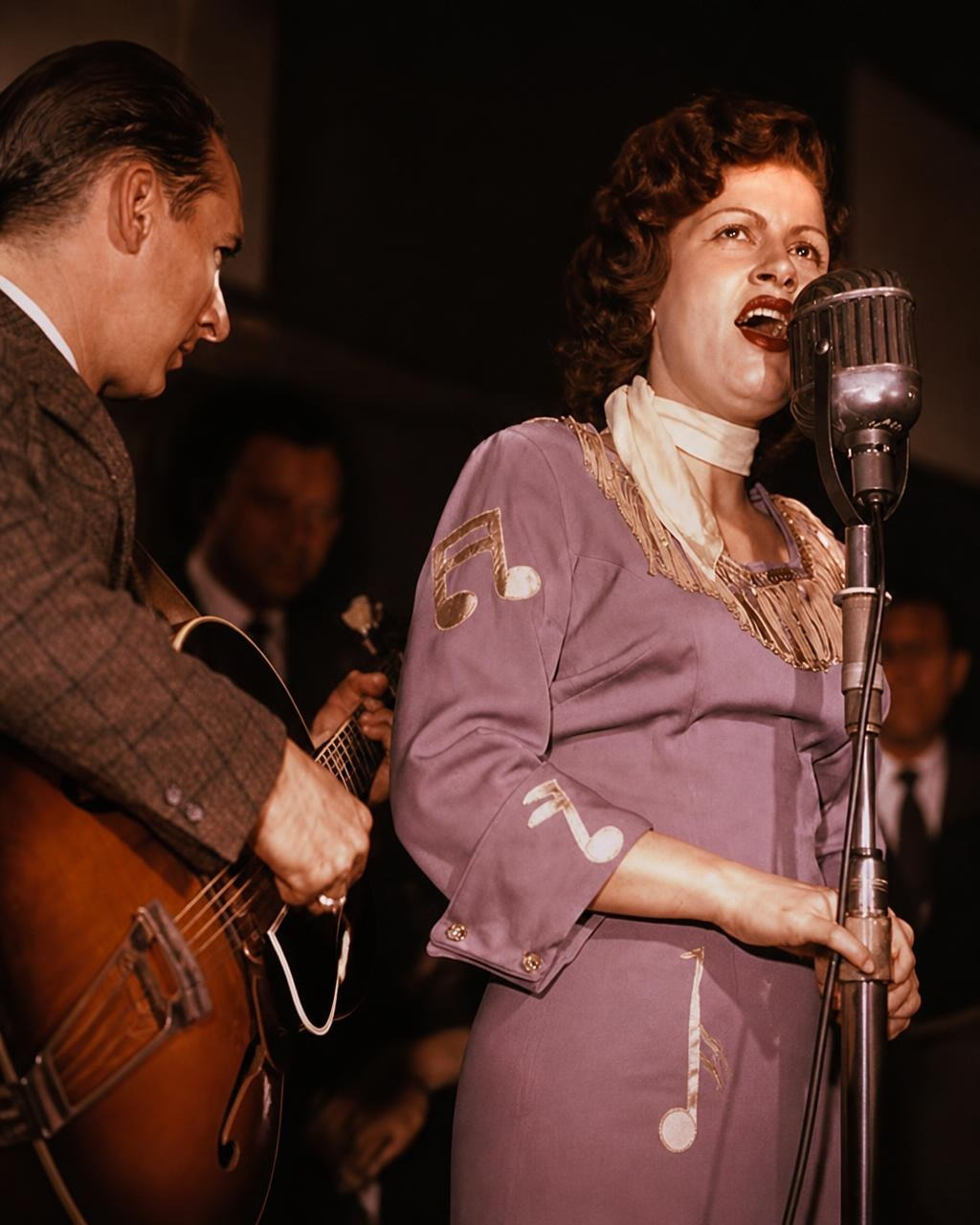
Patsy Cline, the Song She Didn’t Want, and the Night America Finally Listened
On January 21, 1957, Patsy Cline stepped onto the stage of Arthur Godfrey’s Talent Scouts in New York and walked into the moment that would change her career. She had planned to sing “A Poor Man’s Roses (Or a Rich Man’s Gold),” a song she believed fit her voice and style. But behind the scenes, producer Janette Davis pushed her toward “Walkin’ After Midnight,” a song Patsy Cline had already recorded and did not especially like.
Patsy Cline was not eager to change course. She had her own idea of what she wanted to present to the national audience, and she also had a cowgirl image she was comfortable with. Janette Davis had a different vision. She encouraged Patsy Cline to trade the western look for a cocktail dress, a small shift that gave the performance a more polished, television-ready feel. It was a gamble, and Patsy Cline agreed only after resistance.
Then the lights came on.
Patsy Cline sang “Walkin’ After Midnight” with a calm, clear confidence that cut through the room. The audience responded immediately. The performance was strong enough that she won the competition that night, and Arthur Godfrey told her she had won before she even left the stage. It was the kind of television moment that felt simple in the moment but huge in hindsight: one song, one stage, one chance, and suddenly Patsy Cline was no longer just another promising country singer.
Decca moved quickly. “Walkin’ After Midnight” was rushed out as a single on February 11, 1957. The record soon climbed to No. 2 on the country chart and No. 12 on the pop chart, giving Patsy Cline her first major hit and her first real national breakthrough. The song she had tried not to sing became the song that made America notice her.
A Turning Point That Felt Bigger Than a Single Song
That night mattered because it showed something important about Patsy Cline: even when she doubted a choice, her voice could make it feel inevitable. The performance did more than boost one record. It opened the door to a wider audience and marked the start of a career that would only grow stronger in the years ahead.
Looking back, the story feels almost too perfect to be true. A reluctant singer. A producer’s insistence. A dress instead of a cowgirl outfit. And then the song Patsy Cline did not want to sing became the one people remembered. But that is how careers sometimes change—not in grand speeches, but in one brave performance, when the right song finds the right voice at the right time.
Sometimes the song that feels wrong in the room becomes the one that changes everything.
For Patsy Cline, January 21, 1957 was not just a television appearance. It was the beginning of national recognition, the moment her voice moved from promising to unforgettable.