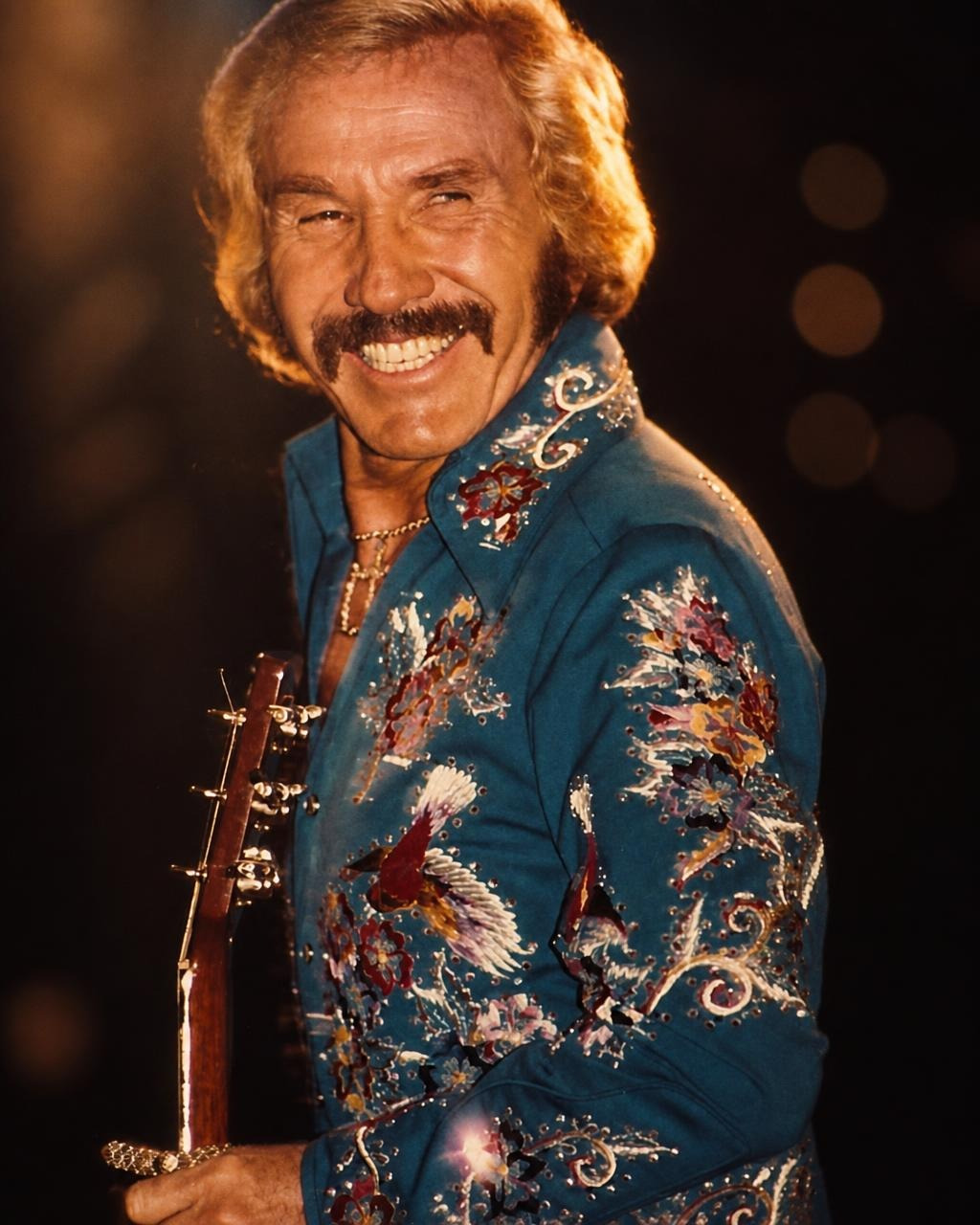
Marty Robbins Took the Long Way to the Finish Line
On November 7, 1982, Marty Robbins climbed into a stock car and did something that already sounded improbable before the green flag ever waved. He was 57 years old, already a survivor of two heart attacks, and he lined up for the Atlanta Journal 500 at Atlanta International Raceway in a Junior Johnson-built Buick Regal, No. 22. He started 36th, finished 33rd, and the numbers barely matter now. What matters is that he showed up at all.
By then, Marty Robbins had become known for more than country hits. He had also built a second life around racing, a sport that matched his taste for risk and speed. Atlanta was his last NASCAR start, and it came only weeks before the end of his life. The race was not a victory lap. It was a hard, stubborn act of will from a man who had been arguing with his own body for years.
A singer who refused to slow down
Marty Robbins’ health had already changed the course of his life once before. In August 1969, while touring Ohio, he suffered a heart attack. In January 1970, he became one of the early patients to undergo bypass surgery, at a time when the operation was still considered experimental. Another heart attack followed later. Even so, he kept working, recording, performing, and racing. That kind of persistence became part of his legend.
Then, just four weeks before that final race, Marty Robbins received a moment of recognition he had not expected. On October 11, 1982, the Country Music Association surprised him on live television with his induction into the Country Music Hall of Fame. Eddy Arnold had persuaded him to attend without telling him why. Marty Robbins said he thought other people deserved the honor before him. Then he accepted it in the plain, unforgettable way only Marty Robbins could: it might not happen again, so I’m gonna take it tonight.
“It might not happen again, so I’m gonna take it tonight.”
The final stretch
Twenty-five days after the Atlanta race, on December 2, 1982, Marty Robbins’ heart failed again. Surgeons at St. Thomas Hospital in Nashville opened his chest for a quadruple bypass. He held on for six more days and died on the night of December 8, 1982, with Marizona and their two children at the hospital. The story ends there, but the image does not: a man who kept going, even when going was the hardest thing left to do.
Marty Robbins was not defined by a finishing position, and he was not defined by a single illness, either. He was defined by the way he kept stepping forward, song after song, lap after lap, honor after honor, even when the road ahead had already started to narrow. That is why the Atlanta race still feels like a final chapter worth remembering. He did not win it. He simply drove it, all the way to the end. And in his own way, that was enough.