Glen Campbell, Memory, and the Last Song He Couldn’t Leave Behind
Some recording sessions are about polish. Others are about patience. For Glen Campbell, the sessions for Ghost on the Canvas became something far more intimate: a long, quiet collaboration built around a notebook, a fading memory, and the stubborn act of finishing what had been started.
A notebook in the studio
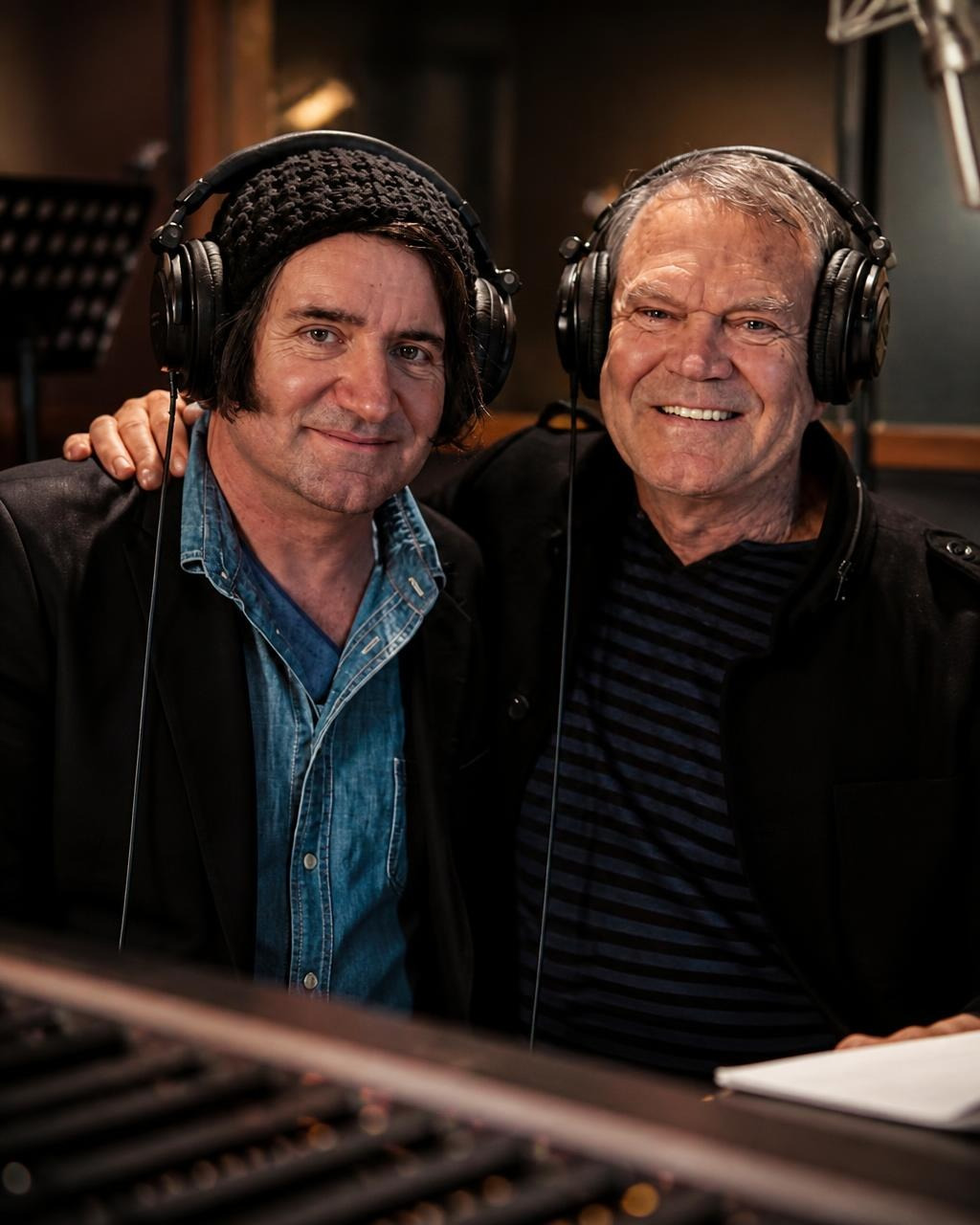
In 2009, producer Julian Raymond began tracking Glen Campbell through the studio with a small notebook. He was not writing down technical notes or song ideas in the usual way. Instead, he was collecting the plain, unfinished sentences Campbell would say between takes — the kind of remarks people often forget as soon as they hear them. Campbell had started losing things: lyrics, names, and pieces of conversation. Raymond listened closely, wrote those fragments down, and later turned some of them into rough songs for Campbell to complete.
Campbell did not know that every casual comment might end up becoming part of the album. He only noticed that Raymond kept asking questions. Later, that detail carried its own sadness and tenderness at once.
Finishing the record
The sessions stretched across two and a half years. By the time the album was finished, the forgetting had a name: Alzheimer’s disease. Yet Raymond has said the recording process never stopped because Campbell could not perform. Campbell sang every take. What was painful to witness was not a lack of ability, but Campbell’s frustration with himself when something that once felt easy no longer stayed in place.
Some days I am so confused, Lord.
That line opened Ghost on the Canvas, and it came directly from the notebook Raymond had been keeping. It was not just a lyric. It was evidence of a life being documented in real time, one small moment at a time.
The public farewell
The album arrived on August 30, 2011, just two months after Glen Campbell publicly revealed that he had Alzheimer’s. He was 75. Soon after, a farewell tour that had first been planned for five weeks grew into a run that lasted a year and a half, with 151 sold-out shows. A teleprompter sat at his feet, and three of his children played in the band beside him.
Even then, the stage was not only about goodbye. It was also about endurance, family, and the strange grace of continuing in front of an audience that understood what was happening even when words could not fully explain it.
The last song
In January 2013, months after the final show, Julian Raymond brought Glen Campbell back into a Los Angeles studio one more time. Campbell had spent a whole day answering questions about the disease, and eventually said something that Julian Raymond wrote down as carefully as the rest: he did not understand why everyone was so worried, because it was not as if he was going to miss anybody.
That became I’m Not Gonna Miss You. The song was cut in four takes in a single day, with veteran Wrecking Crew musicians behind him. It was the last thing Glen Campbell ever recorded. Later, it won a Grammy for Best Country Song and was nominated for an Academy Award.
By then, Glen Campbell was already living in a memory care facility and could not be told what the song meant. But the recording still stands as a final, clear moment in a career built on voice, timing, and feeling. Even as memory slipped away, the music stayed long enough to say goodbye.