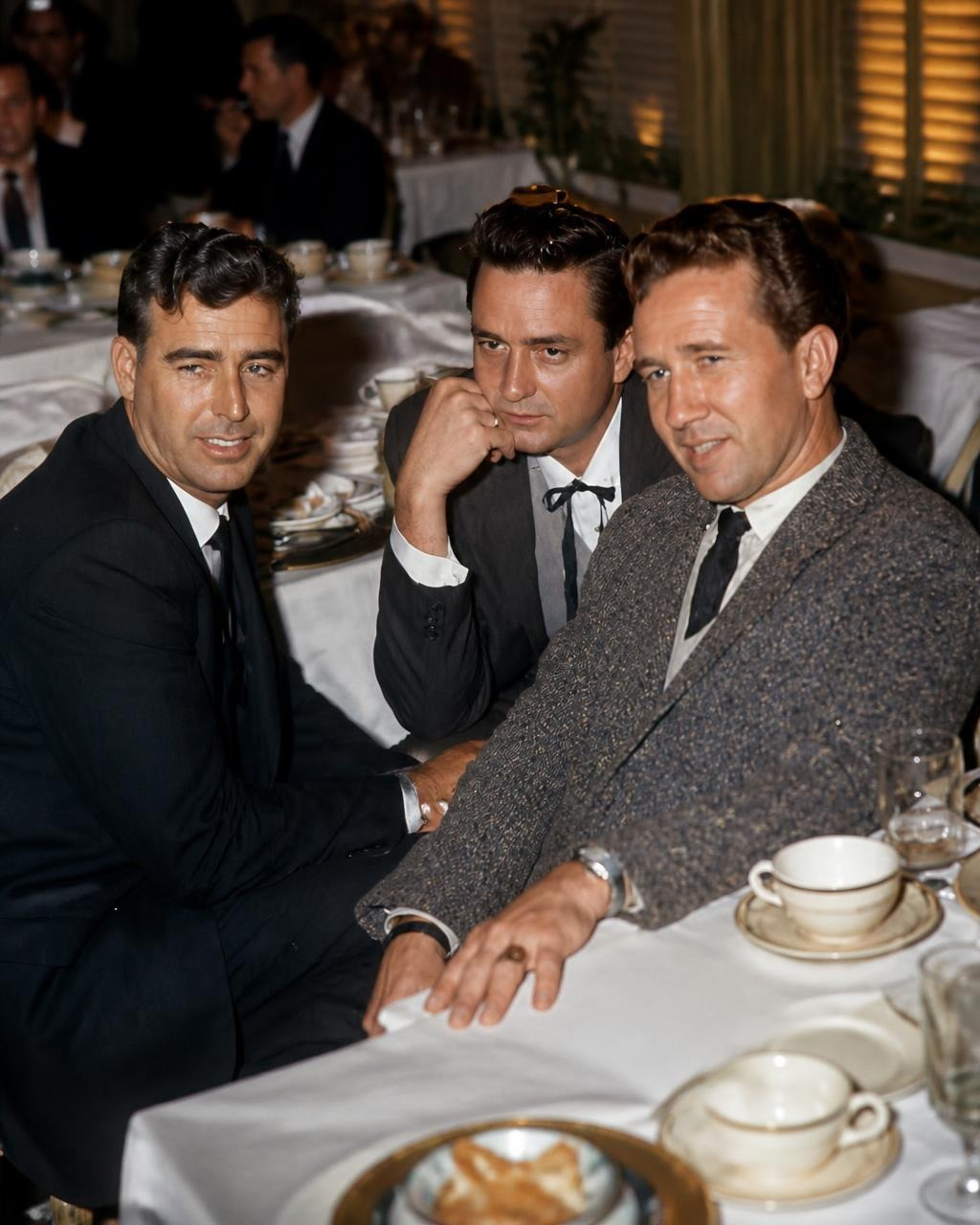
Four Voices Rising in 1956
In 1956, country music felt like it was changing in real time. Johnny Horton, Johnny Cash, and Marty Robbins were all moving forward at once, each with a different sound, each beginning to leave a mark that would last far beyond that year. It was not just a good season for country music. It was a turning point.
Three careers, three different paths
Johnny Horton was finding his stride with “Honky-Tonk Man”, a record that helped establish him as a force in the genre. That same year, Johnny Cash released “I Walk the Line,” a song that would become one of the most recognizable in American music. Marty Robbins, meanwhile, was building momentum with “Singing the Blues,” which became a major country hit and crossed into the pop world as well.
They were not clones of one another. Johnny Horton had a rugged, story-driven style. Johnny Cash carried a deep, plainspoken authority. Marty Robbins brought a smoother, more polished vocal approach. Yet all three seemed to be reaching the public at the same time, as if listeners were ready for three different kinds of truth.
The records grew bigger
The rise did not stop there. Johnny Horton went on to record “The Battle of New Orleans” and “North to Alaska,” songs that expanded his reach and gave him some of the biggest successes of his life. Marty Robbins later delivered “El Paso,” a song that became one of the most celebrated story songs in country music. Johnny Cash kept growing into a voice that would become impossible to ignore, one of the most distinctive in American popular music.
Looking back, it is striking how much changed in just a few years. In 1956, all three men were climbing. By the end of 1960, that climb had already turned tragic for one of them.
Johnny Horton’s final ride
On November 5, 1960, Johnny Horton was killed in a car crash near Milano, Texas. He was 35 years old. The loss hit hard because it came so suddenly, just as his career had reached a powerful new level. He had recorded hit after hit, and there was every reason to believe more would follow.
Johnny Cash, who was a close friend, took part in Johnny Horton’s funeral by reading from the Gospel of John. It was a quiet, solemn gesture, and it said more than any speech could have. In that moment, the music world was reminded that success does not protect anyone from heartbreak.
What remains
History often makes these stories feel neat, but they were not neat at all. They were lived by real men in motion, with hopes, pressure, talent, and uncertainty all happening at once. Johnny Horton did not get the chance to grow old alongside Johnny Cash and Marty Robbins. He was gone before the next chapter could fully unfold.
And yet the songs remain. So do the voices. When people hear those records now, they are hearing more than a list of hits. They are hearing a brief, powerful moment when three different artists were rising together, and one of them was already on borrowed time.