Some songs stay exactly the same for decades while the people listening to them change completely. This is the story of one of those songs: a country ballad that began with one son’s grief, was sung for years in a father’s voice, and ended up belonging to another son who never asked for it.
A Song Written the Night After
In 1986, songwriter Gary Burr got the phone call he had been dreading for years. His father, an electrician from Meriden, Connecticut, had lived with heart trouble for a long time. Gary was used to rushing to the hospital. This time, when he got there, he was told his father was already gone.
The next night, Gary sat down with a tape recorder running and sang a brand-new song almost from beginning to end. He never changed a word. Then he sent it to his publisher, Harold Kleiner, fully expecting it to stay in a drawer forever. To him, it was too personal, too long and too sad for radio.
The tape passed from Harold Kleiner to Chuck Howard, and from Chuck Howard to Conway Twitty. Conway’s answer was simple: he didn’t care if it was eleven minutes long, he was cutting it.
The Story Inside the Song
The song was “That’s My Job.” It follows one life in three scenes. First, a little boy wakes up crying from a nightmare that his father has died, and he goes to his dad for comfort. Next, he is a restless teenager arguing with his father about whose dreams should shape his future, and he admits he’s scared of failing far from home. Both times, the father answers the same way: looking after his son is simply what he is there for.
In the last scene, the boy is a grown man and the news he always feared has finally come. For all his years and all his travels, he finds himself saying the same thing that frightened little boy said long ago.
Conway Twitty released it in November 1987 from the album Borderline, and it climbed to No. 6 on the Billboard country chart. With that deep, steady voice, Conway sounded like the father in every verse, and that is how millions of people heard it.
A Late-Night Knock on the Door
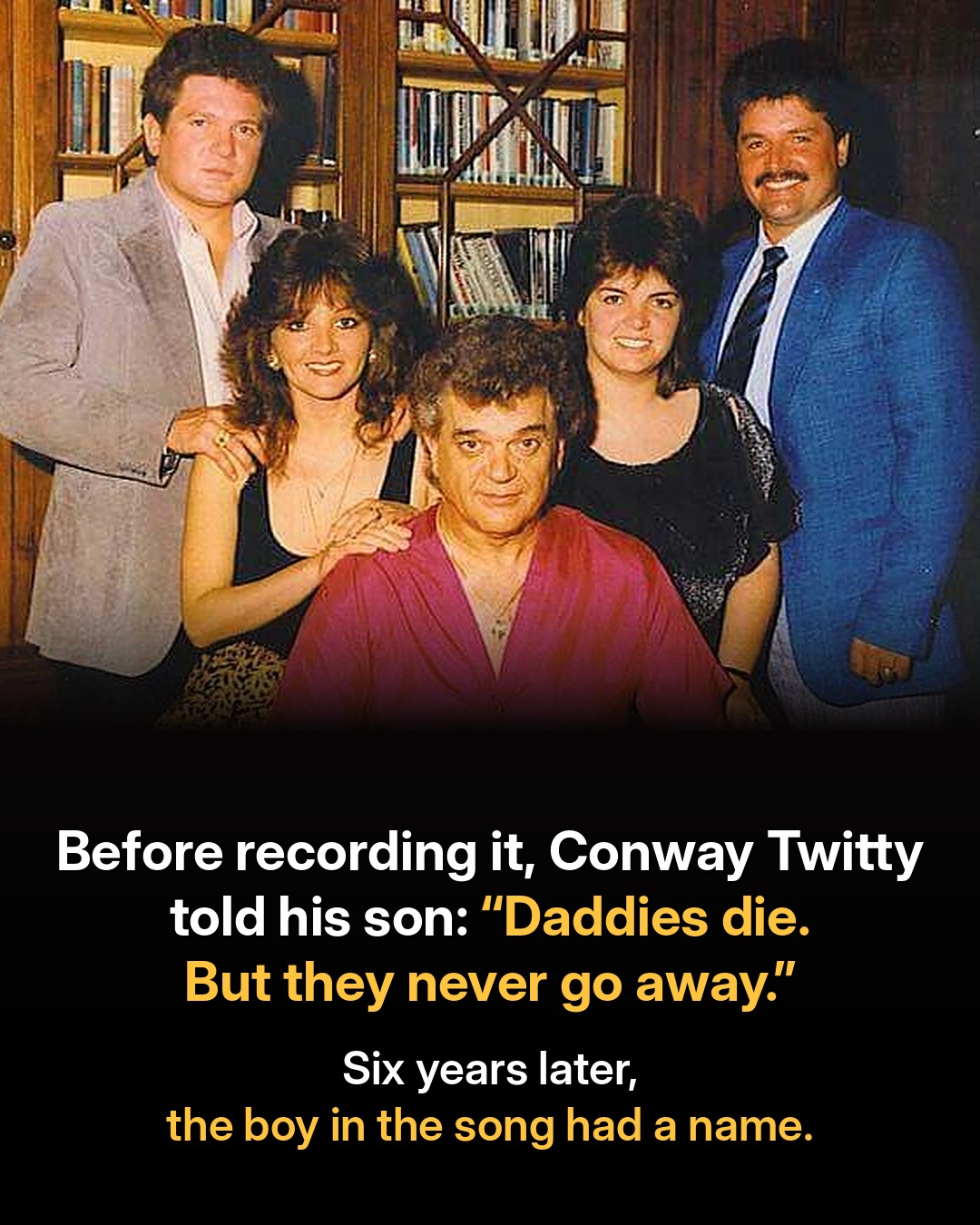
Before he recorded it, Conway wanted one person to hear it first. Years later, his oldest son, Michael Twitty, described that night. His dad showed up at his door in his favorite Mickey Mouse pajamas, holding a cassette, and asked him to listen to a song he was thinking about recording.
They sat on the couch and played it. Michael didn’t like it, and Conway noticed. Michael finally told him why: it was the first time he had ever thought about life without his father.
Conway looked down at his slippers and told his son one of life’s great secrets:
“Daddies die. But they never go away.”
He told Michael that whenever he heard that song, whether his dad was alive or gone, he should know his father was with him. The two of them talked for six hours, until the sun came up.
June 1993
On June 4, 1993, Conway Twitty played a show in Branson, Missouri. On the bus ride home to Hendersonville, Tennessee, he collapsed. He died the next day, June 5, at just 59 years old. Nobody had seen it coming.
When the Song Changed Hands
After that, the song could never sound the same. The boy waking up from a terrible dream was no longer a character. He was Michael. The father’s promise was no longer only a lyric. It was something Conway had said to his son on a couch in the middle of the night.
Michael later wrote that when his dad died, he thought his father had left him, but over time he learned that he hadn’t. He said he could feel his presence every day through his music. In 2015, Michael lent his own voice to a recording of “That’s My Job,” singing the words his father had once sung to the world.
Two Sons, One Song
The song began on the night after one son lost his father without warning. Six years after it reached radio, it belonged to another son whose father went just as suddenly.
Gary Burr wrote it to say goodbye to his own dad. Conway Twitty sang it as a father. Michael Twitty ended up living it. The words never changed. The people hearing them did.
Is there a song that sounds different to you now than the first time you heard it?