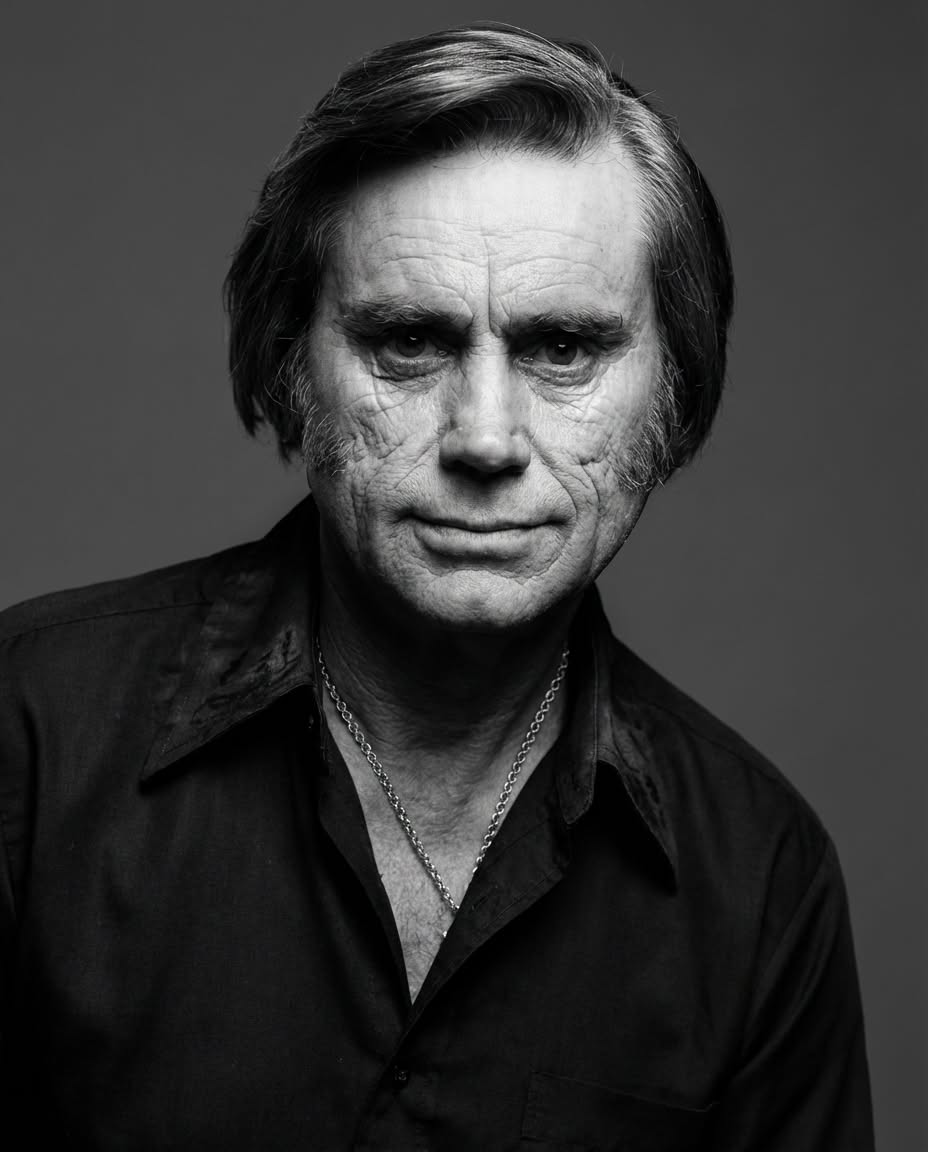
George Jones Didn’t Have a Drinking Problem — Nashville Had a George Jones Problem
They called him No Show Jones, as if the joke explained the damage. Fans bought tickets, filled seats, and waited under stage lights that sometimes stayed empty. George Jones could be the most astonishing voice in country music and, at the same time, one of its most unreliable stars. That contradiction became part of the legend.
The lawnmower story says almost everything about the myth and the misery. According to George Jones himself, a wife hid the car keys to keep him from driving for alcohol. He found another way anyway, climbing onto a riding mower and heading out to the liquor store. The image sounds too wild to believe, which is exactly why it stuck. Years later, George Jones even leaned into the story and turned it into part of his public image.
But the deeper story is not just about one man’s self-destruction. Nashville knew what George Jones was going through. Nashville also knew what George Jones could do on a microphone. The industry did not simply witness the collapse; it benefited from it. The heartbreak, the legend, the unpredictability — all of it became part of the sale. His pain was not hidden from the machine. It was packaged by it.
That is why the triumph of He Stopped Loving Her Today feels so haunting. Recorded in 1980 and long remembered as the song George Jones doubted because it sounded too sad to succeed, it became the defining performance of his career. The song is not just a country classic. It is the sound of a man who understood grief so fully that he could make it feel immortal.
George Jones kept performing through chaos, and eventually he also found a way to recover some stability. By the late 1990s, he had gotten sober and was working again with a clearer footing. He died in 2013, leaving behind a body of work that still towers over country music.
So the question still hangs there, plain and uncomfortable: did we love George Jones the artist, or did we love the wound that made the art feel bigger?
Maybe the real tragedy is that Nashville learned to cheer for both.
George Jones remains unforgettable because he was never just a cautionary tale. He was a man, a voice, and a mirror for an industry that often confuses suffering with authenticity. That is the part that lingers long after the final note.