In 1986, songwriter Gary Burr received a call that seemed painfully familiar. His father, Alan Burr, was at the hospital again, and Gary expected to do what he had done before: go there, pick him up, and bring him home.
But when Gary arrived and asked for his father, the hospital staff directed him to a waiting room.
Then came the news Gary had never expected to hear that morning.
His father was gone.
Gary initially struggled to understand. He had come to give his father a ride home. How could his father already be gone?
What happened the following night would eventually become one of Conway Twitty’s most unforgettable recordings.
A Son Who Never Expected to Say Goodbye
Alan Burr was an electrician from Meriden, Connecticut, who owned an electrical contracting business. Gary had worked alongside his father during summer vacations and once expected to follow him into the family trade.
Music eventually took Gary in another direction, but his childhood and his father’s influence remained part of who he was.
By 1986, Gary had already lost his mother, who died in 1981. His father had experienced serious heart problems and had been hospitalized repeatedly. Gary knew his father’s health was fragile, but knowing that did not make the final news any easier to comprehend.
Gary returned home carrying the reality of a loss that would change his life.
The next night, he sat down with a tape recorder.
As Gary later explained in an interview preserved by Middle Tennessee State University, he began playing and singing a song about his father. Remarkably, he completed almost the entire composition in one sitting and never changed a word.
He called it That’s My Job.
The Song Gary Burr Thought Nobody Would Record
The song follows the relationship between a father and son through different stages of life.
As a little boy, the son turns to his father for comfort. As he grows older, he continues to depend on his father’s reassurance. Eventually, the story reaches the painful understanding that a parent’s love can remain powerful even after that parent is gone.
For Gary Burr, these were not simply characters invented to fit a melody. The song drew directly from his memories, his family, and the father he had just lost.
Yet Gary doubted anyone would record it.
Country radio favored much shorter singles. This song ran nearly five minutes, carried a deeply personal story, and dealt openly with grief.
Gary sent the recording to his contact Harold Kleiner anyway. Harold played it for Chuck Howard, who eventually brought it to Conway Twitty.
That was where the story took an unexpected turn.
Conway Twitty Made a Decision That Changed Everything
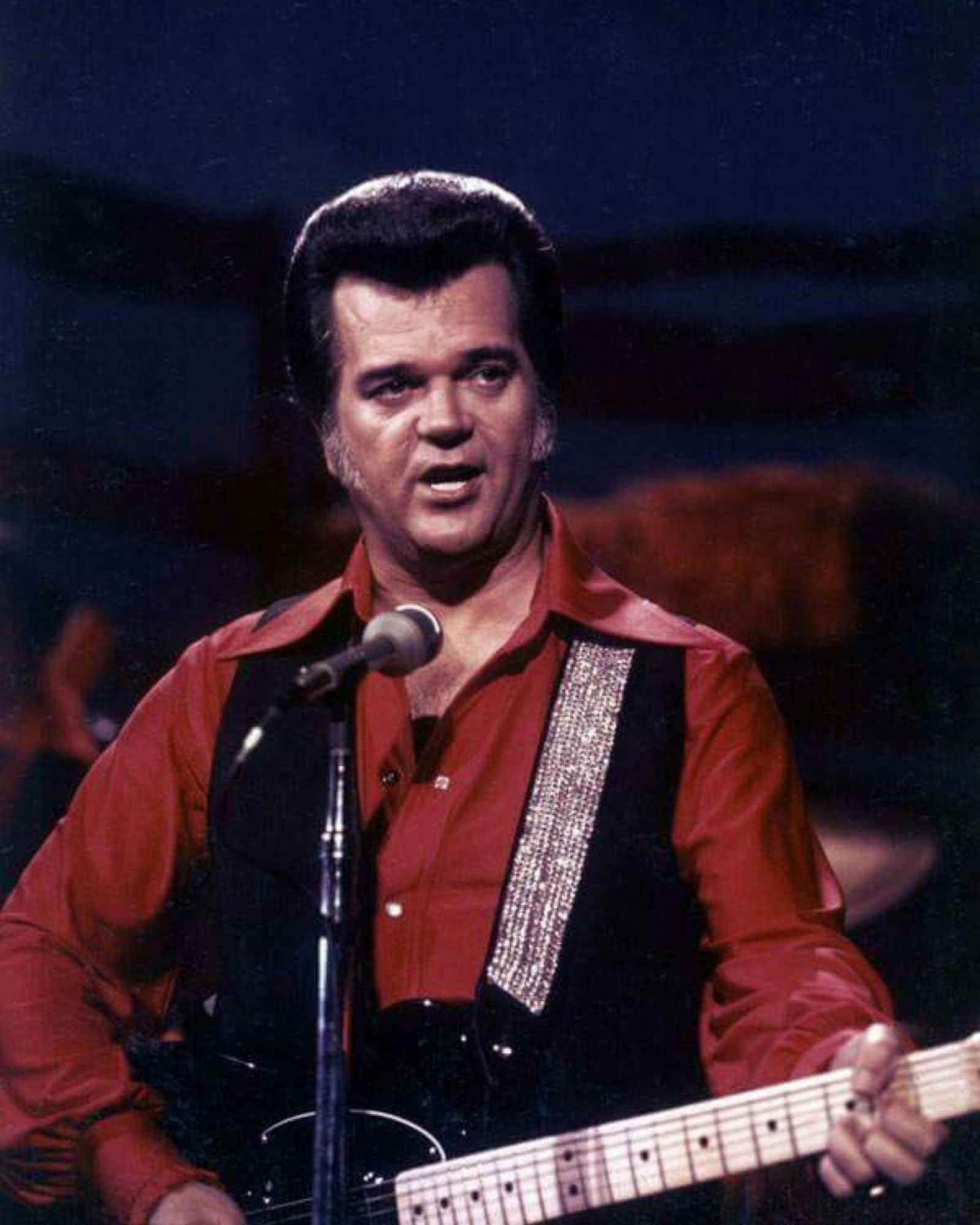
Conway Twitty was already one of country music’s most successful recording artists. Conway Twitty understood the importance of a good story, whether it concerned heartbreak, family, regret, or devotion.
When Conway heard Gary Burr’s composition, its unusual length did not discourage him.
Gary later remembered Conway’s reaction as remarkably straightforward:
“I don’t care if it’s eleven minutes long, I’m cutting it.”
Conway Twitty followed through.
The song appeared on Conway Twitty’s 1987 album Borderline and was released as a single that November.
Its running time was approximately four minutes and fifty-four seconds, unusually long for a country radio single of that period.
Some radio stations were reluctant to give it heavy rotation because of its length. Nevertheless, the recording climbed to No. 6 on Billboard’s country chart on February 27, 1988.
It never reached No. 1, but its impact would extend well beyond its chart position.
The Ordinary Father Behind an Extraordinary Country Song
Years later, Gary Burr reflected on what made the recording so meaningful.
Millions of listeners could hear Conway Twitty sing about a devoted father without realizing they were hearing a story rooted in the life of Alan Burr, an electrician from a small Connecticut city.
That thought meant a great deal to Gary.
His father had not been a country music star. Alan Burr had built a business, raised a family, and worked for a living. Yet through one song, an ordinary father’s love became part of country music history.
Conway Twitty died on June 5, 1993, but the recording remains a treasured reminder of why country music can speak so personally to its listeners.
For anyone who has ever lost a father, That’s My Job carries a meaning that no chart ranking can measure.
What began as one son’s private grief became a song through which generations of listeners could remember their own fathers.