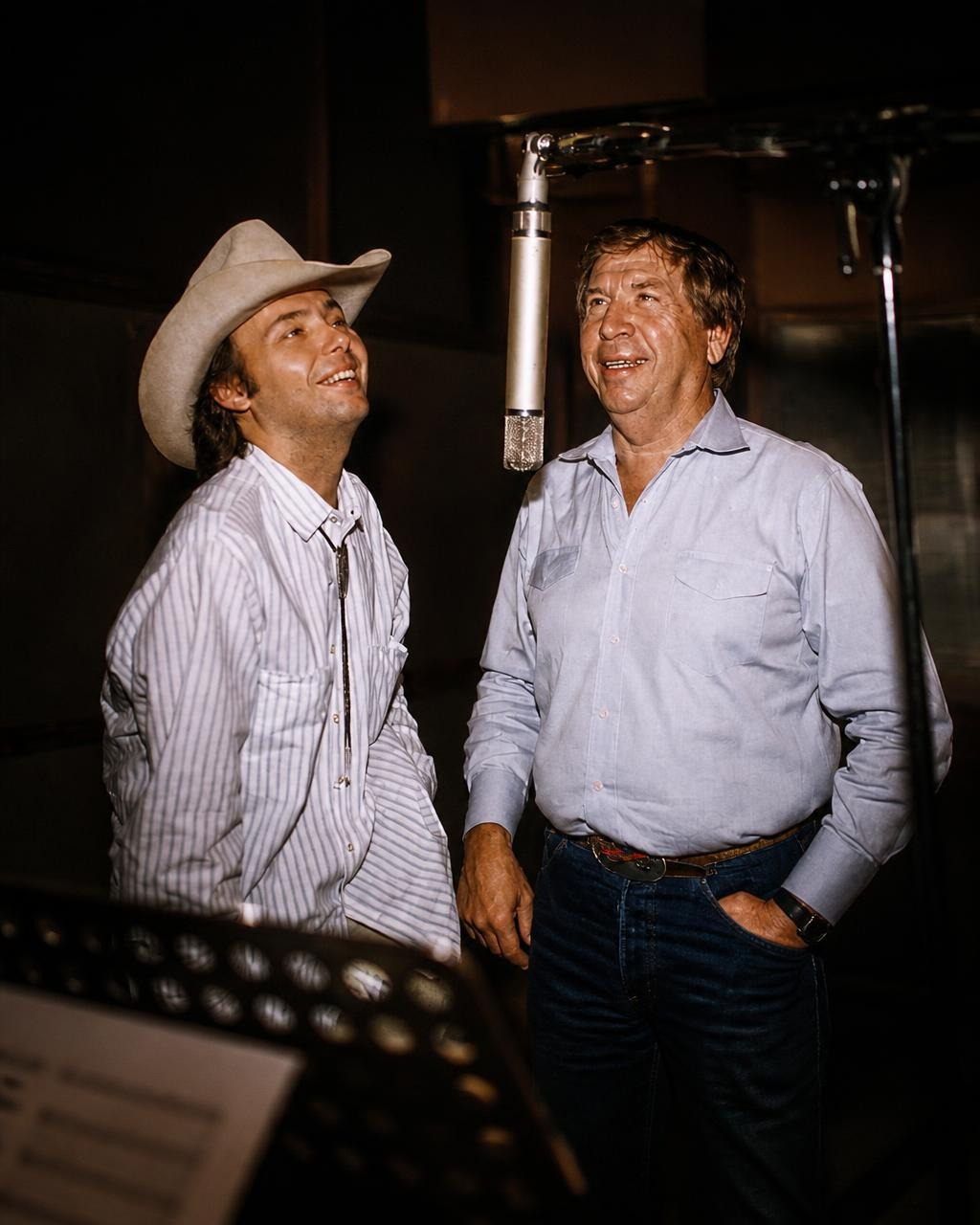
Buck Owens, Dwight Yoakam, and the Song That Brought Him Back to No. 1
By 1987, Buck Owens was not the kind of artist who needed to prove anything to country music. He had already helped shape the Bakersfield sound, built a legacy as one of the genre’s most recognizable voices, and spent years as a favorite of fans who never forgot what he meant to the music. His last No. 1 country hit had come in 1972 with “Made in Japan,” and after that, the spotlight moved on. But Buck Owens himself never really disappeared. He was still there, still a towering figure, still the man younger artists studied with admiration and gratitude.
One of those artists was Dwight Yoakam. He had grown up listening to the hard-edged, honky-tonk style Buck Owens helped define, and by the mid-1980s, Dwight Yoakam was carrying that influence into a new generation of country music. On September 23, 1987, he walked into Buck Owens’ office and asked the man he admired to join him onstage at the Kern County Fair. Buck Owens said yes, and the crowd response made it clear that the connection between the two singers was immediate and real.
A meeting of generations
What happened next was not just a nostalgic moment. It was the beginning of a collaboration that felt natural, almost inevitable. Dwight Yoakam was bringing Bakersfield-style country back into the mainstream, and Buck Owens was the living source of that sound. When they stood together, it was more than a duet. It was a handshake between the past and the present, between the artist who helped build the style and the artist who wanted to carry it forward.
“Streets of Bakersfield” had already existed in Buck Owens’ catalog in an earlier recording from the 1970s, but the 1988 version gave it new life.
Recorded together by Dwight Yoakam and Buck Owens, the song became one of those rare releases that feels both familiar and fresh. It kept the rough, working-class spirit of Bakersfield country, but the timing was perfect for a broader audience ready to listen again. In October 1988, “Streets of Bakersfield” reached No. 1 on Billboard’s country chart.
One final return to the top
For Dwight Yoakam, it was his first No. 1 hit. For Buck Owens, it was his 21st. Just as important, it was his first No. 1 in 16 years. That detail gives the story its emotional weight. Buck Owens was not chasing a comeback for its own sake. He was simply showing up, saying yes to a younger artist who respected him, and finding himself carried back to the top one more time.
That is what makes the story endure. It is not only about chart positions or industry history. It is about recognition. Dwight Yoakam understood that the sound he loved had a source, and Buck Owens recognized that this younger singer was not imitating him shallowly but honoring him with real care. Together, they created a moment that felt earned.
It would also be Buck Owens’ final No. 1. But in a strange way, that makes the song even more meaningful. Sixteen years after country radio last put Buck Owens at the top, a singer who grew up admiring him helped take him there one last time. For listeners, it was a hit. For country music, it was a full-circle moment. For Buck Owens, it was a closing chapter written with a friend who never forgot where the story began.