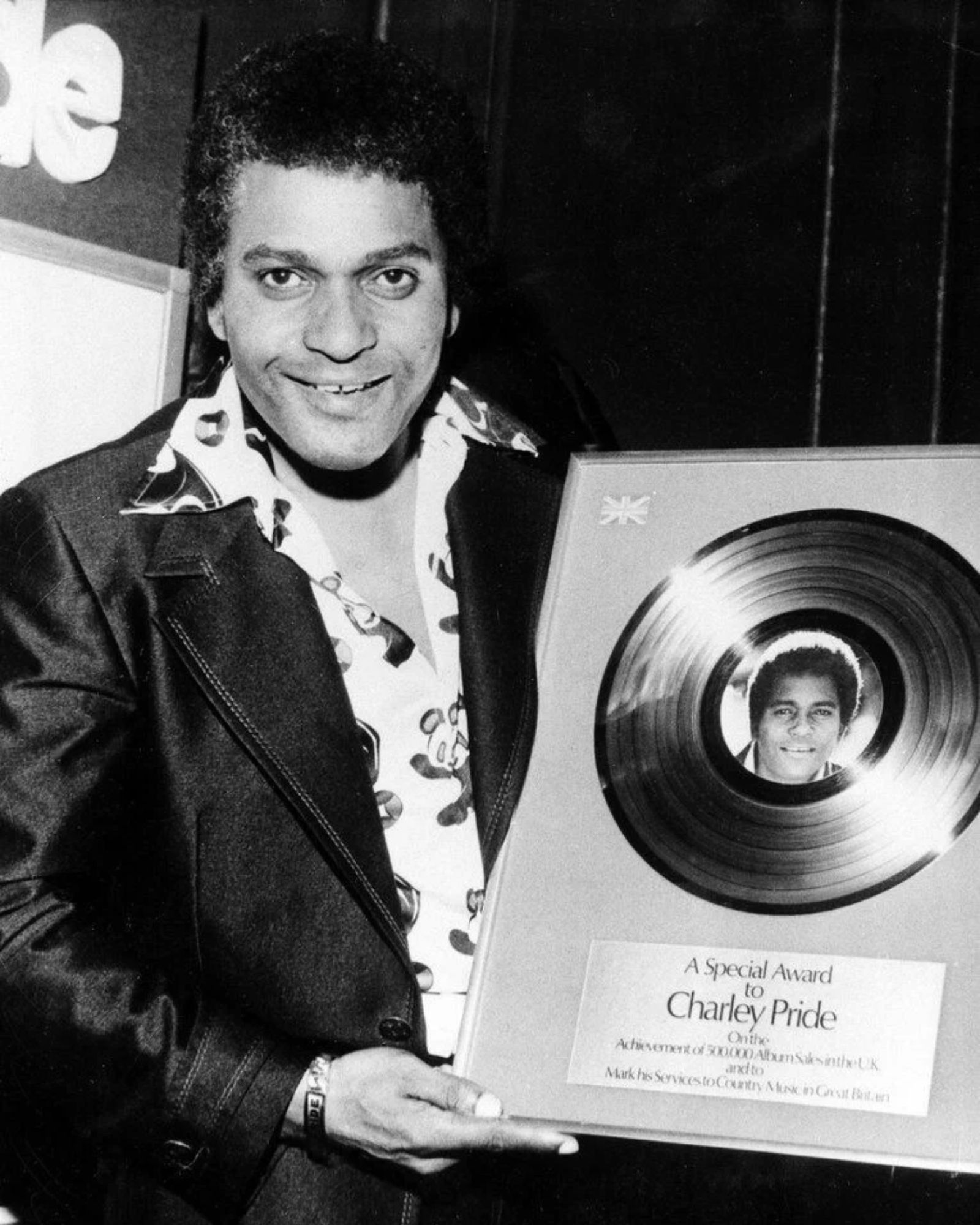
In 1965, Chet Atkins helped bring an unusual proposition before RCA Records executives. The company had heard a promising new country singer, but there was something the executives did not initially know about Charley Pride.
Charley Pride was Black.
At a time when country music was marketed overwhelmingly to white audiences, signing Charley Pride raised questions that had little to do with musical ability. Yet Chet Atkins believed the voice on those recordings deserved a chance.
What makes this story especially remarkable is what happened before that decision—and the unusual way one Nashville producer introduced Charley Pride’s voice to people in the music business.
The Producer Who Wanted Everyone to Listen First
Before Charley Pride became a household name, country music was not even the original career plan. Born in Sledge, Mississippi, in 1934, Charley Pride dreamed of becoming a professional baseball player. Charley Pride played in the Negro Leagues and minor leagues before eventually finding a different path toward Nashville.
Country singers Red Sovine and Red Foley had encouraged Charley Pride to pursue music. Manager Jack Johnson later helped connect Charley Pride with producer Cowboy Jack Clement.
In August 1965, Cowboy Jack Clement brought Charley Pride into RCA Studio B in Nashville to record demonstration songs. Cowboy Jack Clement paid for the session, convinced that the Mississippi singer had something special.
Then came an extraordinary little experiment.
According to Cowboy Jack Clement’s own recollection, the producer had large speakers in the office and would invite people from the music business inside.
Cowboy Jack Clement would play Charley Pride’s recording at a tremendous volume.
Only after the visitors had heard the music would Cowboy Jack Clement show them a photograph of the singer.
The producer later remembered enjoying those encounters. There was something revealing about watching people respond enthusiastically to a voice before discovering that the singer was Black.
It was more than a clever demonstration. It showed how Charley Pride’s talent could challenge assumptions that might otherwise prevent anyone from giving the recordings a fair hearing.
What Happened Inside RCA
Cowboy Jack Clement eventually brought Charley Pride’s recordings to Chet Atkins, the respected guitarist and RCA’s Nashville recording executive.
Chet Atkins recognized the quality of Charley Pride’s singing and took the recordings to RCA’s senior executives.
According to the Country Music Hall of Fame, Chet Atkins received approval to sign Charley Pride before revealing the singer’s race.
Years later, Chet Atkins recalled that the revelation prompted a lengthy discussion. Some executives worried that radio stations or listeners in the South might boycott the company’s records.
Those fears reflected the racial barriers of the 1960s, when a Black singer entering mainstream country music faced obstacles that white performers generally did not.
Nevertheless, RCA signed Charley Pride.
The company made another unusual decision. Charley Pride’s early singles were distributed to radio stations without the customary publicity photographs.
Listeners could hear the voice without knowing the face behind it.
The first two singles failed to establish Charley Pride as a major recording artist. But the third, “Just Between You and Me,” reached the country Top 10 in 1967.
That breakthrough opened doors no publicity photograph could have opened alone.
The Night a Detroit Audience Fell Silent
Radio listeners were one thing. A live audience was another.
During an early major appearance at Detroit’s Olympia Stadium, Charley Pride experienced a moment that remained memorable decades later.
The audience had been enthusiastically applauding the introduction. But when Charley Pride walked onto the stage, the applause abruptly stopped.
Charley Pride later recalled that the room became so quiet a pin could have been heard dropping.
Instead of ignoring the tension, Charley Pride addressed it with humor, joking about appearing on a country music show with a permanent tan.
The audience laughed and applauded.
Charley Pride then began singing.
That lighthearted introduction became a familiar part of Charley Pride’s early performances. Eventually, growing fame made such explanations unnecessary.
From RCA’s Gamble to One of Its Greatest Stars
In 1969, “All I Have to Offer You (Is Me)” became Charley Pride’s first No. 1 country single.
By 1971, Charley Pride had won the Country Music Association’s Entertainer of the Year award. Over the years, Charley Pride accumulated 29 Billboard country No. 1 hits, three Grammy Awards, and induction into the Country Music Hall of Fame in 2000.
At RCA, only Elvis Presley outsold Charley Pride.
It was a remarkable outcome for an artist whose recording contract had once caused executives to worry about how audiences would react.
But perhaps the most telling part of Charley Pride’s story remains those early encounters in Cowboy Jack Clement’s office.
People listened to a country singer, liked what they heard, and only afterward discovered who was singing.
Decades later, those recordings remind us of something important about Charley Pride’s place in country music history: long before the awards, the gold records, and the standing ovations, the voice was already good enough.