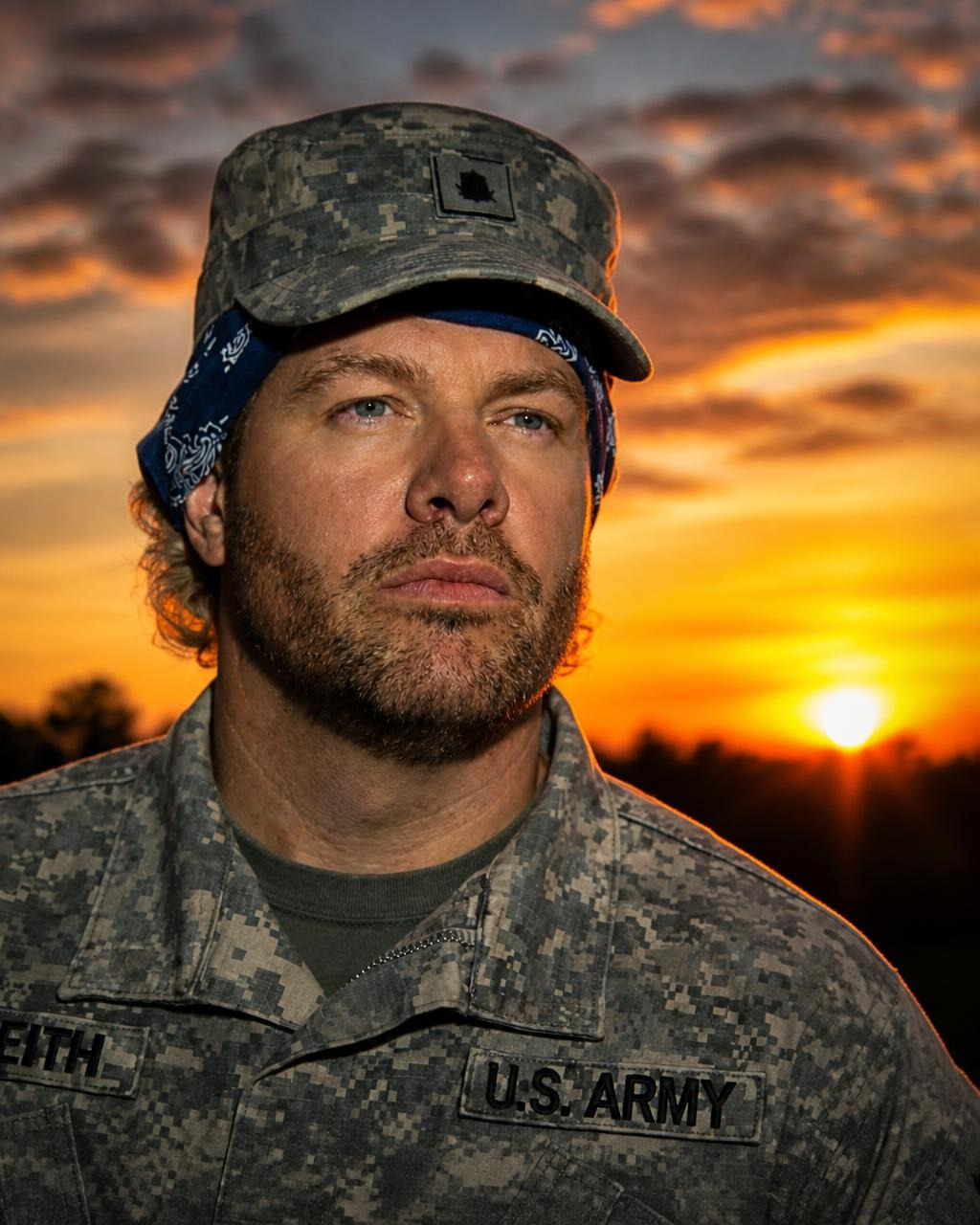
MORTAR FIRE SENT 2,500 SOLDIERS RUNNING FOR COVER. WHEN THE ALL-CLEAR CAME, TOBY KEITH WALKED BACK ONSTAGE AND FINISHED THE SHOW.
On April 24, 2008, Toby Keith was midway through a concert for American service members at Kandahar Airfield in Afghanistan when the night changed in an instant. About 2,500 troops had come to hear music, but mortar rounds began hitting the base, and the performance stopped as soldiers and staff rushed for shelter. The danger was real, immediate, and impossible to ignore.
Keith did not disappear into the background while everyone waited. Instead, he moved with the troops to a concrete bunker about 100 yards away and stayed there for roughly an hour. With the show paused and the audience stuck in a tense holding pattern, Toby Keith did what he could to keep spirits steady. He talked with service members, signed autographs, and posed for photographs while the base waited for the all-clear.
A concert interrupted by war
The scene was a sharp reminder that for many USO performances, the line between entertainment and deployment-area reality could vanish without warning. Keith had already built a reputation for visiting military bases and putting on shows in difficult places, and this night showed why those trips meant so much to the people in uniform. He was not just singing about soldiers from far away. He was standing beside them when the shooting started.
When the all-clear finally came, Keith had a choice. He could have stopped for the night and left the rest to others. He could have been escorted somewhere safer and called it a dramatic close. Instead, he walked back to the stage, picked up where he had left off, and finished the concert.
Why that moment mattered
That decision said a lot about Toby Keith’s bond with military audiences. It was not only the songs that made him relatable to service members. It was the willingness to share the same risk, the same bunker, and the same long wait before the music could continue. For the troops who were there, the memory was bigger than a concert. It was a small, unforgettable show of solidarity.
He sang about soldiers on the radio, but when the mortars came, he took cover beside them. And when they walked back out, he walked back out with them.
Years later, that April night still stands out as one of the clearest examples of why Toby Keith earned so much trust from the military community. The story was never just about a famous singer braving danger for one evening. It was about presence, respect, and follow-through. In Kandahar, those things mattered as much as the final song.