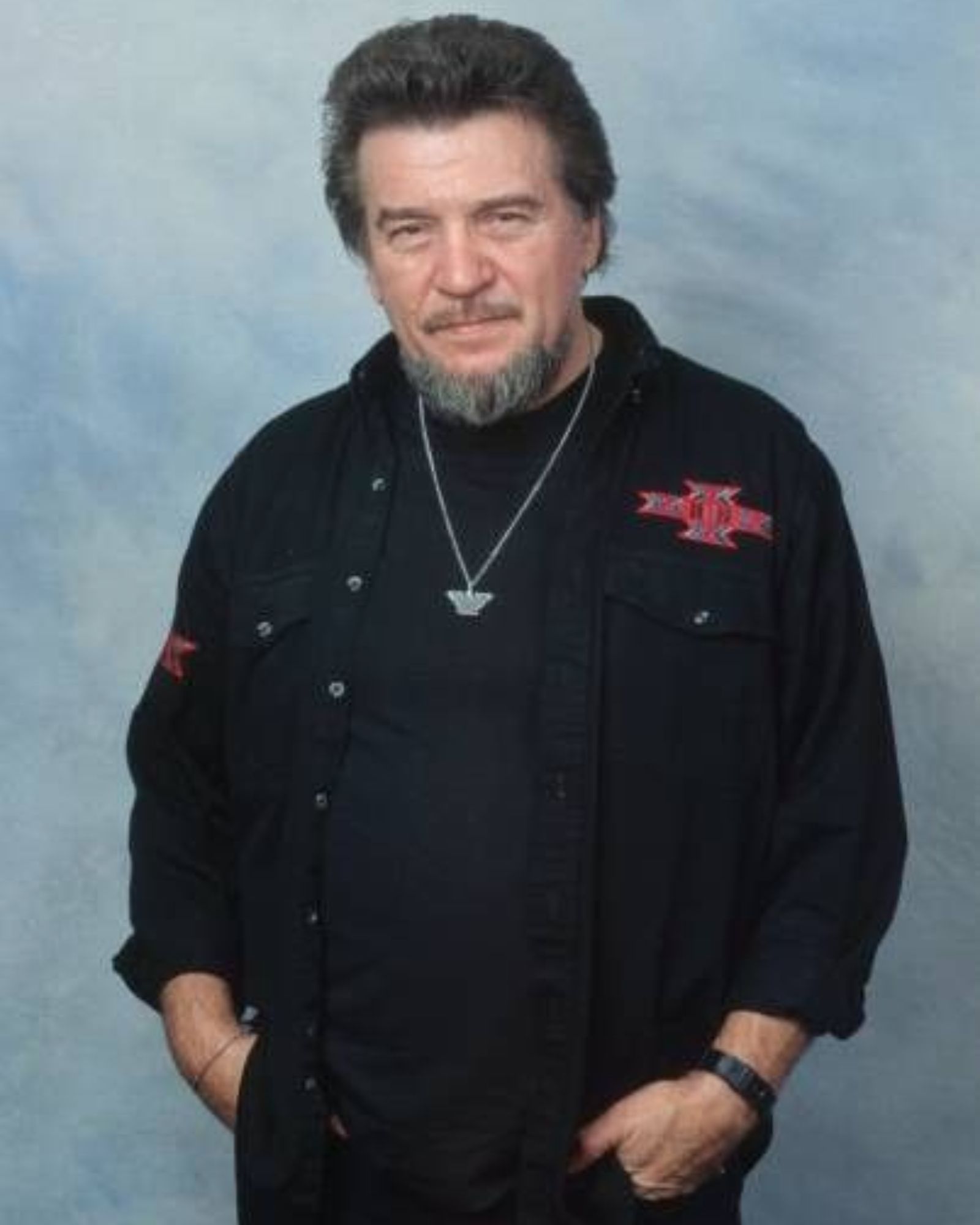
On March 23, 2002, something unforgettable happened inside Nashville’s Ryman Auditorium. Friends, family, and fellow musicians had gathered to say goodbye to Waylon Jennings. But when the evening reached its final moments, the last song did not come from any of the stars standing onstage.
It came from Waylon Jennings himself.
More than five weeks had passed since Waylon Jennings died on February 13, 2002, at the age of 64. Yet a recording of the country legend’s voice would provide one final musical farewell, turning an already emotional tribute into a remarkable moment in country music history.
A Guitar, a Cowboy Hat, and an Empty Stage
Waylon Jennings had been laid to rest in a private ceremony in Arizona. But the influence of Waylon Jennings extended far beyond family and close friends. Musicians who admired Waylon Jennings and fans who had followed the music for decades wanted an opportunity to honor the man who helped change Nashville.
The Ryman Auditorium was a fitting setting.
Onstage hung a black backdrop bearing the familiar silver “W” from the Waylon Jennings road show. A black guitar was displayed with a black cowboy hat resting on top. Red rose petals lay nearby.
Those simple objects said much about the person being remembered. The guitar represented a lifetime of music. The cowboy hat recalled an image that had become inseparable from the outlaw country movement.
And the silver “W” was a reminder of the unmistakable identity Waylon Jennings had built by refusing to follow Nashville’s rules.
The Musicians Who Came to Say Goodbye
Among the performers were Travis Tritt, Kris Kristofferson, Billy Ray Cyrus, David Lee Murphy, and Stargunn, the band led by Waylon Jennings’ son, Shooter Jennings.
Travis Tritt praised the determination of Waylon Jennings to remain faithful to a personal musical vision. Then Travis Tritt performed “Lonesome, On’ry and Mean,” one of the songs most closely associated with the rebellious spirit of Waylon Jennings.
For Shooter Jennings, the evening carried a different kind of meaning. Shooter Jennings was not simply honoring a country music legend. Shooter Jennings was remembering a father.
“Basically, he taught us all how to rock,” Shooter Jennings told the audience.
Shooter Jennings then promised that the band would demonstrate what had been learned.
Jessi Colter, the widow of Waylon Jennings and a respected recording artist, was also present. Reverend Will Campbell, a writer and civil rights advocate who had once worked as a cook for Waylon Jennings, delivered the eulogy.
Johnny Cash was unable to attend. According to Johnny Cash’s manager, medical advice had discouraged travel during the winter weather.
Video montages recalled different chapters of the Waylon Jennings career, while messages from musicians including Paul Simon, Graham Nash, and Neil Diamond reflected the unusually wide reach of the music.
Then Came the Final Song
After approximately two hours of performances and remembrance, the service approached its conclusion.
Instead of another musician taking the stage, a recording began playing through the Ryman Auditorium.
The song was “The Dream,” described in contemporary accounts as the last song Waylon Jennings had written and recorded.
For an audience that had spent the evening hearing other artists perform the music of Waylon Jennings, there was something especially meaningful about hearing the familiar voice again.
The unmistakable delivery, the rough edges, and the individuality that had defined so many recordings were still there.
Then members of the audience answered the recording with words of affection.
“God bless you, Waylon!”
“We love you, Waylon!”
It was a farewell that no elaborate speech could have improved.
The Remarkable Connection to an Earlier Ryman Concert
There was another reason the setting carried such weight.
In January 2000, Waylon Jennings had performed at the Ryman Auditorium during concerts that would later be released as Never Say Die: The Final Concert. Travis Tritt was among the guests who joined Waylon Jennings onstage during those performances.
Just over two years later, Travis Tritt returned to the same historic venue to pay tribute to Waylon Jennings.
The recording of “The Dream” would also reach listeners beyond the memorial. In 2003, the song appeared on I’ve Always Been Crazy: A Tribute to Waylon Jennings, an album featuring artists from different musical backgrounds celebrating the influence of Waylon Jennings.
Waylon Jennings spent a lifetime fighting for the freedom to make music on personal terms. That independence helped reshape country music and inspired generations of performers.
But on March 23, 2002, the lasting power of Waylon Jennings needed no explanation.
The music was playing, the familiar voice had returned to the Ryman, and the audience still had one last chance to say, “We love you, Waylon!”