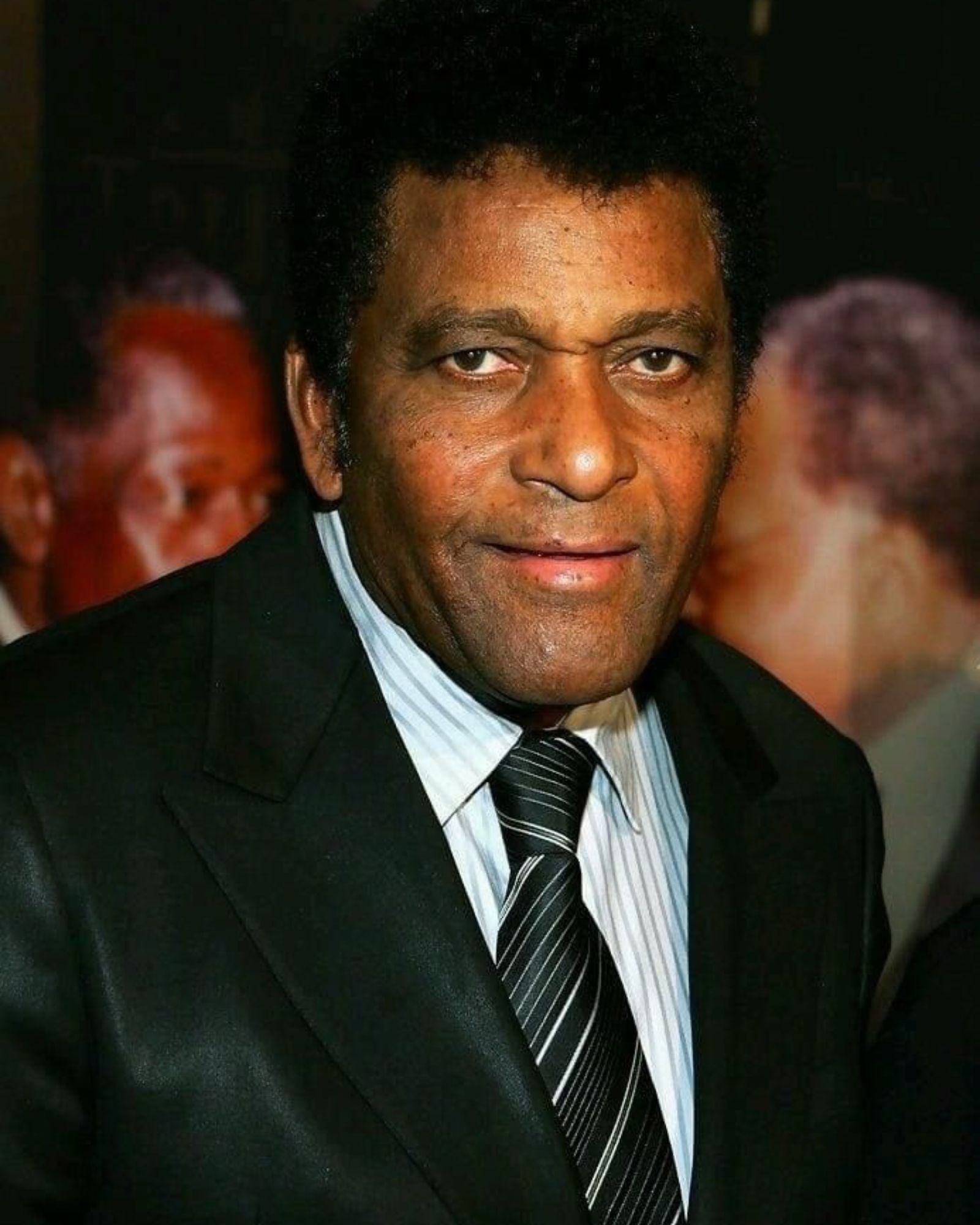
The crowd had been cheering moments earlier. Thousands of country music fans had gathered in Detroit, ready for an evening of familiar songs and Southern voices. When the announcer introduced an exciting new singer from Mississippi, the audience welcomed the name with enthusiastic applause.
Then Charley Pride stepped into the spotlight.
The cheering suddenly faded. Many people in the audience had never seen Charley Pride before. They knew the records, but they didn’t know that the man singing those country songs was Black.
For a few uncomfortable seconds, the room fell remarkably quiet.
What happened next became one of the most revealing moments in Charley Pride’s extraordinary career.
The Country Singer Radio Listeners Had Never Seen
Long before that Detroit performance in early 1967, Charley Pride had grown up in Sledge, Mississippi, listening to country music on the radio.
Born on March 18, 1934, Charley Pride developed a love for the Grand Ole Opry and the traditional country songs that filled the family radio. Baseball was another passion, and Charley Pride initially dreamed of becoming a professional ballplayer.
Music eventually offered a different opportunity.
After singing around Montana, Charley Pride attracted the attention of established country performers who encouraged a trip to Nashville. Producer Cowboy Jack Clement recognized the talent and recorded demonstrations that eventually reached RCA executive Chet Atkins.
But getting a recording contract was complicated.
Record executives worried about whether country radio stations, particularly in the segregated South, would accept a Black country singer.
When RCA released Charley Pride’s early recordings in 1966, the promotional materials did not include the customary photograph. Many disc jockeys heard the voice without knowing the singer’s appearance.
The records began finding an audience.
Then came the challenge of meeting that audience face to face.
The Moment Detroit Fell Silent
At a major Detroit country music show in early 1967, television and radio personality Ralph Emery introduced Charley Pride to a large audience.
The introduction received an enthusiastic response. But when Charley Pride appeared onstage, the applause stopped almost immediately.
Charley Pride understood the awkwardness of the situation. Rather than ignoring it, Charley Pride greeted the crowd with humor, joking about a “permanent tan.”
The audience laughed.
Applause returned, and Charley Pride began singing.
It was a small exchange, but it demonstrated a remarkable ability to acknowledge the tension without allowing it to define the entire performance.
Yet winning over an audience did not mean every obstacle disappeared.
The Radio Station That Wanted to Stop Playing Charley Pride
One of the most striking stories from those early years involved another country music star, Faron Young.
As recounted in Ken Burns’ documentary Country Music, a disc jockey attending a Nashville industry gathering revealed that a radio station had decided to stop playing Charley Pride’s records after discovering that Charley Pride was Black.
Faron Young was furious.
Faron Young responded by demanding that the station remove Faron Young’s records as well if it intended to stop playing Charley Pride.
It was an important act of support from an established performer at a time when Charley Pride was still building a career.
The incident also exposed an uncomfortable contradiction: a station could appreciate the music until it learned the identity of the person singing.
From an Uncertain Beginning to 29 Number-One Hits
In 1967, Just Between You and Me became Charley Pride’s first Top 10 country hit.
Two years later, All I Have to Offer You (Is Me) became the first of 29 No. 1 country singles.
More favorites followed, including Is Anybody Goin’ to San Antone, I’m Just Me, and the unforgettable Kiss an Angel Good Mornin’.
In 1971, Charley Pride received the Country Music Association’s Entertainer of the Year award. Charley Pride also earned three Grammy Awards during a career that produced 52 Top 10 country hits.
In 2000, Charley Pride became the first Black performer inducted into the Country Music Hall of Fame.
The Voice That Country Music Never Forgot
Charley Pride died on December 12, 2020, at the age of 86, leaving behind a catalog that had accompanied generations of country music listeners.
The Detroit audience, the missing publicity photographs, and the radio station controversy reveal how difficult the early journey could be.
But the lasting achievement reaches far beyond those barriers.
Charley Pride became one of the most successful singers in country music history while performing the music that had been loved since childhood.
And for countless fans who remember hearing Kiss an Angel Good Mornin’ on the radio, Charley Pride’s legacy remains something deeply personal: a familiar voice capable of bringing back an entire lifetime of memories.