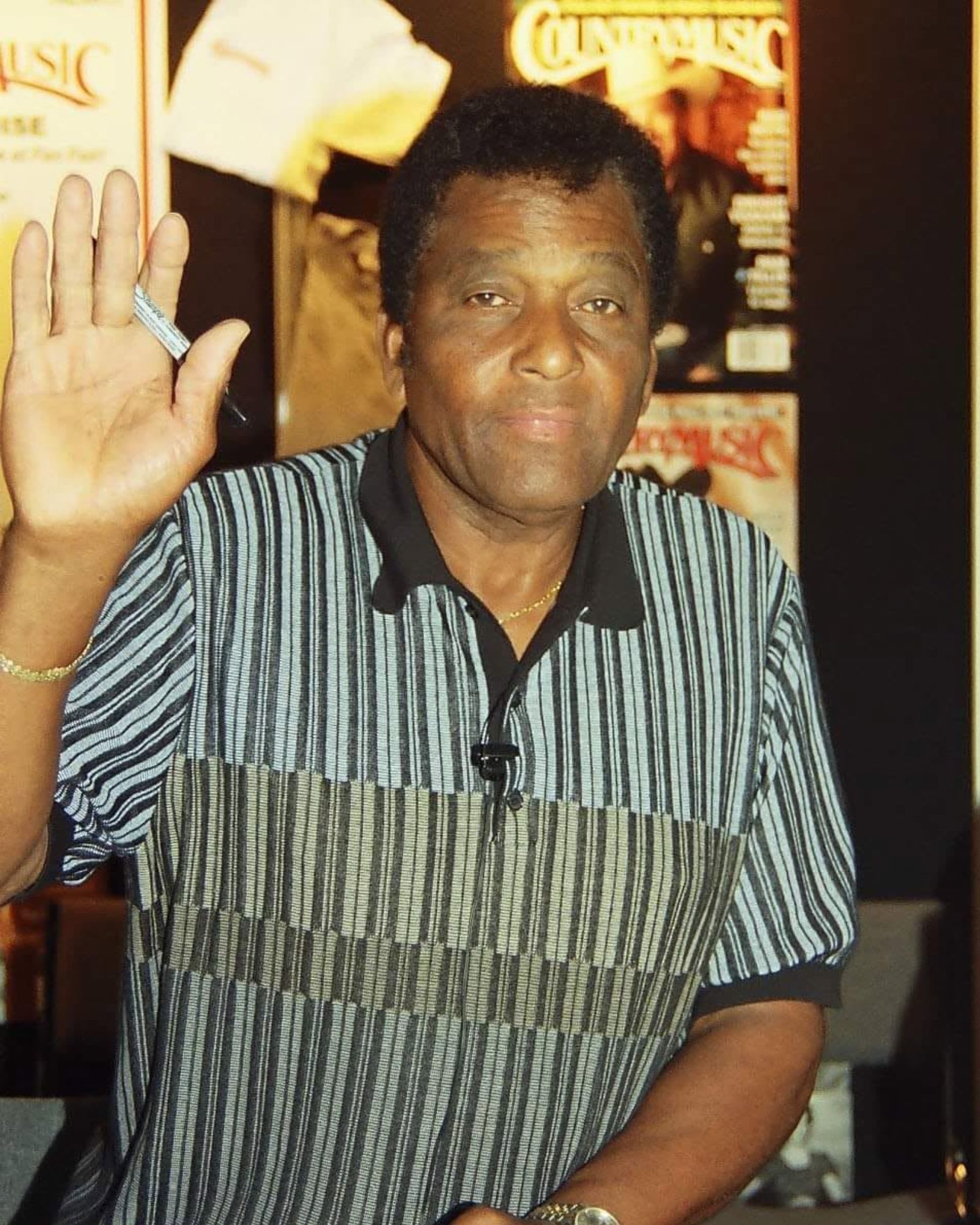
Before Charley Pride became one of country music’s biggest stars, Charley Pride had a very different dream: playing Major League Baseball. And in one of the strangest twists in American music history, two bus rides helped change the course of Charley Pride’s life.
The first involved a struggling baseball team that sold Charley Pride to buy transportation. The second came after a legendary baseball manager refused to give Charley Pride a chance. That journey eventually led to a recording contract, 29 No. 1 country hits, and a place in the Country Music Hall of Fame.
The Baseball Player Who Helped Buy a Bus
Born in Sledge, Mississippi, in 1934, Charley Pride grew up in a sharecropping family. Baseball offered a possible escape from the cotton fields, and Charley Pride pursued that dream through the Negro Leagues and minor league baseball.
In 1954, Charley Pride and teammate Jesse Mitchell were playing for the Louisville Clippers. The financially troubled team desperately needed transportation, so management sold both players to the Birmingham Black Barons and used the proceeds to purchase a team bus.
Charley Pride later joked about possibly being one of the only baseball players ever traded for a used motor vehicle.
But even then, music was following Charley Pride. Former teammate Otha Bailey remembered Charley Pride sitting toward the back of team buses, picking a guitar that sometimes had only two strings. Other players laughed, but Charley Pride kept playing.
Six Baseball Bats and One Last Chance
Charley Pride continued pursuing professional baseball, including a 1961 tryout with the California Angels. By the early 1960s, injuries and repeated disappointments had made the major leagues increasingly difficult to reach.
Still, Charley Pride refused to abandon the dream.
Believing the struggling New York Mets might offer an opportunity, Charley Pride mailed newspaper clippings to general manager George Weiss. Charley Pride also shipped six Louisville Slugger bats bearing the name Charley Pride to the team’s Florida spring training camp.
Then Charley Pride arrived without an invitation.
The plan failed. Manager Casey Stengel refused to conduct an unscheduled tryout and directed team officials to arrange a bus ticket out of town.
Charley Pride had traveled across the country hoping for a professional baseball opportunity. Instead, Charley Pride was leaving without throwing a pitch.
The Business Card That Opened Another Door
Months earlier, country singers Red Sovine and Red Foley had heard Charley Pride perform in Montana. Impressed by the voice, Red Sovine encouraged Charley Pride to visit Nashville and make contact with Cedarwood Publishing.
After the Mets rejection, Charley Pride remembered the business card Red Sovine had provided.
Rather than heading directly home to Montana, Charley Pride arranged a stop in Nashville.
That decision brought Charley Pride into contact with music businessman Jack D. Johnson, who listened to Charley Pride sing and recognized an opportunity. Jack D. Johnson became Charley Pride’s manager and began searching for a recording contract.
But Nashville presented another obstacle.
Why RCA Initially Kept Charley Pride’s Picture Hidden
In the 1960s, a Black country singer faced considerable resistance in the recording industry. Jack D. Johnson struggled to convince record companies to take a chance on Charley Pride, despite the quality of the music.
Producer Cowboy Jack Clement eventually helped change that situation. On August 16, 1965, Cowboy Jack Clement recorded demonstration songs with Charley Pride at RCA’s Nashville studio.
The recordings impressed RCA executive Chet Atkins, who secured approval to sign Charley Pride.
Charley Pride’s first RCA single, “The Snakes Crawl at Night,” appeared in January 1966. Early promotional material avoided showing Charley Pride’s face, allowing radio audiences to hear the singing before knowing the performer’s racial identity.
By the time “Just Between You and Me” became a Top 10 country hit in 1967, Charley Pride was establishing a national audience.
From the Baseball Diamond to Country Music History
Between 1969 and 1983, Charley Pride earned 29 No. 1 country singles. Songs including “Is Anybody Goin’ to San Antone” and “Kiss an Angel Good Mornin'” became classics. Charley Pride won the Country Music Association’s Entertainer of the Year award in 1971 and became one of RCA’s best-selling artists, behind Elvis Presley.
Baseball never completely disappeared from Charley Pride’s life. Charley Pride later developed a lasting relationship with the Texas Rangers and eventually became a part-owner of the team.
In 2000, Charley Pride entered the Country Music Hall of Fame, a destination far removed from the major league baseball career originally imagined.
Charley Pride died on December 12, 2020, at age 86, leaving a remarkable musical legacy.
The most extraordinary part of the story may be its beginning. One baseball team sold Charley Pride to help buy a bus. Years later, another baseball team sent Charley Pride away on a bus. Neither journey delivered the baseball career Charley Pride wanted, but the second opened a path that changed country music history.