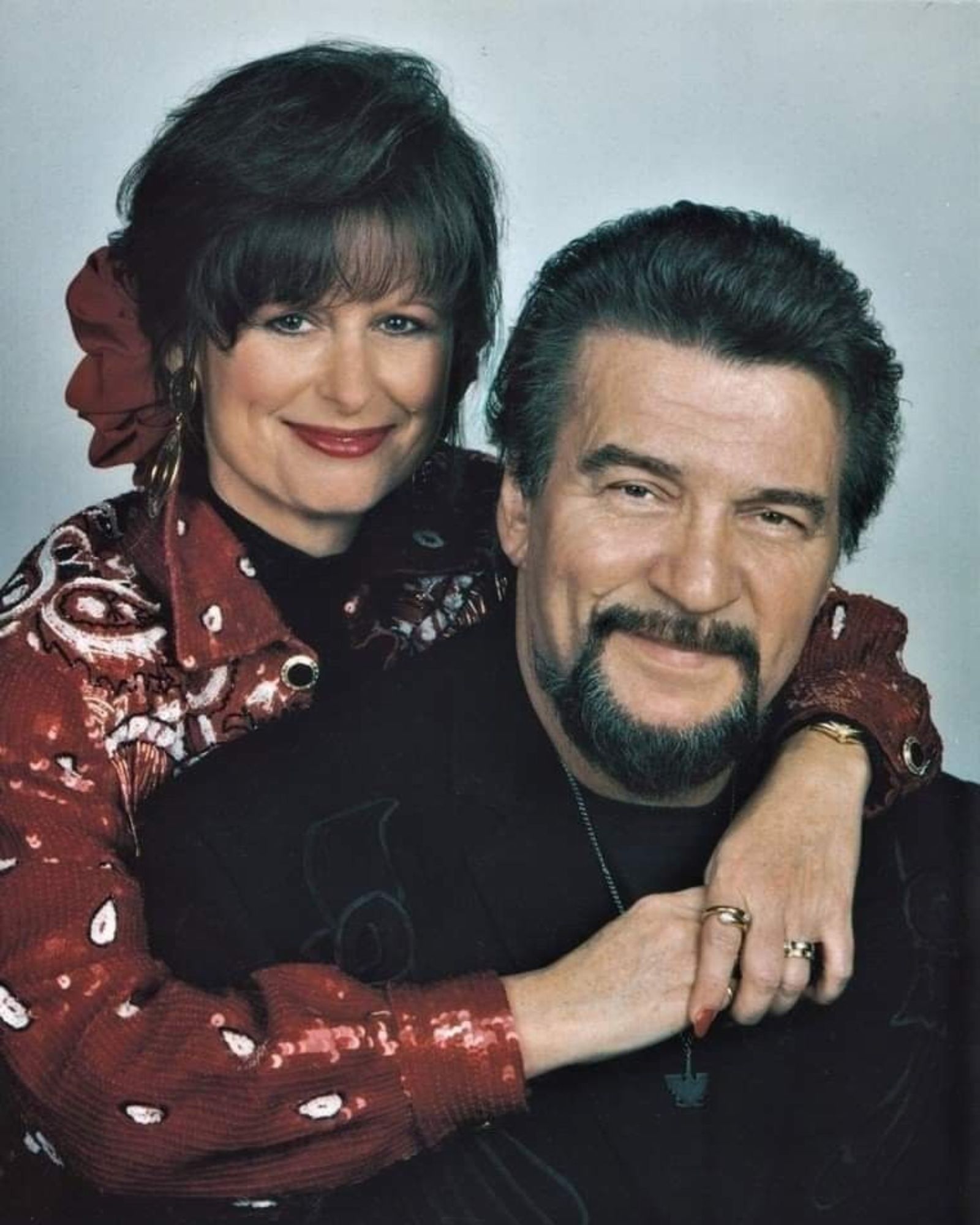
When Jessi Colter married Waylon Jennings in October 1969, the odds were hardly in their favor.
Waylon Jennings had already been through three failed marriages. Nashville knew the deep voice, the restless spirit, and the stubborn musician who refused to follow anyone else’s rules. Behind the confidence, however, was a complicated man carrying troubles that fame could not solve.
Jessi Colter came from a very different world. Raised in a Pentecostal household in Arizona, Jessi Colter grew up listening to a mother who preached the Gospel. Church music filled the early years, and the piano became a natural part of life.
Yet somehow, the outlaw and the preacher’s daughter found something in each other worth holding on to.
What followed was not a perfect love story. It was something far more complicated.
The Woman Behind the Black Hat
By the early 1970s, Waylon Jennings was becoming one of country music’s most recognizable rebels. Alongside Willie Nelson, Waylon Jennings helped challenge Nashville’s polished musical establishment, demanding greater control over recordings and artistic decisions.
But the independence celebrated onstage came with serious struggles away from the spotlight.
Long tours, exhausting schedules, and substance abuse placed tremendous pressure on the marriage. Waylon Jennings struggled with drugs, including amphetamines and cocaine, and those struggles eventually threatened the family life Jessi Colter was trying to protect.
Jessi Colter was building a career of her own. In 1975, “I’m Not Lisa” became a major country and pop hit, proving that Jessi Colter was much more than the wife of a famous musician.
Still, public success did not make the private difficulties disappear.
There were moments when the marriage came dangerously close to ending. Love alone could not erase every problem, and Jessi Colter had to find strength beyond the fame and applause.
Then, in 1981, the couple released a song that would take on an extraordinary meaning.
Two Voices, One Song, and a Promise That Felt Personal
In 1981, Waylon Jennings and Jessi Colter released the duet album Leather and Lace. Among its most memorable recordings was “Storms Never Last,” written by Jessi Colter.
The song was gentle, almost surprisingly so for a performer associated with the rough edges of outlaw country.
There was no need for an elaborate arrangement or dramatic performance. The emotional power came from hearing two familiar voices sing about enduring difficult times together.
For listeners who knew something about the marriage, the recording carried an additional weight.
These were not two strangers performing a fictional romance. Waylon Jennings and Jessi Colter had already experienced years of complicated love, professional success, and personal uncertainty.
Perhaps that is why “Storms Never Last” continues to connect with listeners decades later. The song offers reassurance without pretending that hardship is easy.
And the real-life story behind those voices was still unfolding.
What Lenny Kaye Discovered in 1995
In 1995, musician and writer Lenny Kaye was working with Waylon Jennings on an autobiography when an unexpected moment unfolded inside the family’s Nashville home.
One morning, Lenny Kaye entered the living room and discovered Jessi Colter seated at the piano with a Bible open nearby.
Jessi Colter was singing passages from the Book of Psalms, finding melodies while playing simple chords.
There was no formal performance, no recording session, and no audience waiting for a finished song.
It was simply an intimate expression of faith.
The experience stayed with Lenny Kaye for years. The music revealed a part of Jessi Colter’s life that had existed long before Nashville fame, record contracts, or outlaw-country history.
The preacher’s daughter had never completely left those childhood foundations behind.
After Waylon Jennings Was Gone
Waylon Jennings died on February 13, 2002, ending a marriage that had lasted more than three decades.
Years later, Lenny Kaye encouraged Jessi Colter to revisit the music heard in that living room. Recording sessions began in 2007, capturing spontaneous interpretations of biblical Psalms.
In 2017, Jessi Colter finally released The Psalms, an album connecting the music of later life with the faith of childhood.
It was a remarkable full-circle moment.
Jessi Colter had traveled from church piano benches to Nashville recording studios, through enormous success and deeply personal struggles, before returning to the spiritual music that had helped shape everything.
Why “Storms Never Last” Still Means So Much
Today, listening to “Storms Never Last” can feel different when the history behind the recording is understood.
Waylon Jennings and Jessi Colter never lived a flawless love story. There were painful years, difficult choices, and challenges that neither fame nor talent could simply make disappear.
Yet the marriage endured until Waylon Jennings’ death, and the music remained.
For many country fans, that is what makes the duet unforgettable. It is not a promise that life will always be easy. It is a reminder that people can search for hope even when life becomes difficult.
Do you remember hearing Waylon Jennings and Jessi Colter sing “Storms Never Last” on the radio? Did that song ever help you through a difficult time in your own life?