November 1984: The Strange Road to Ray Charles and Willie Nelson’s “Seven Spanish Angels”
In November 1984, Troy Seals and Eddie Setser finished writing a song and sat in the quiet afterward, wondering who could possibly sing it. They had built it with a certain shadow in mind: the dramatic, borderland feel of Marty Robbins and “El Paso.” But Marty Robbins had already been gone for nearly two years, and the song felt too specific to hand to just anyone. It sounded like a memory, and memory is not always easy to place.
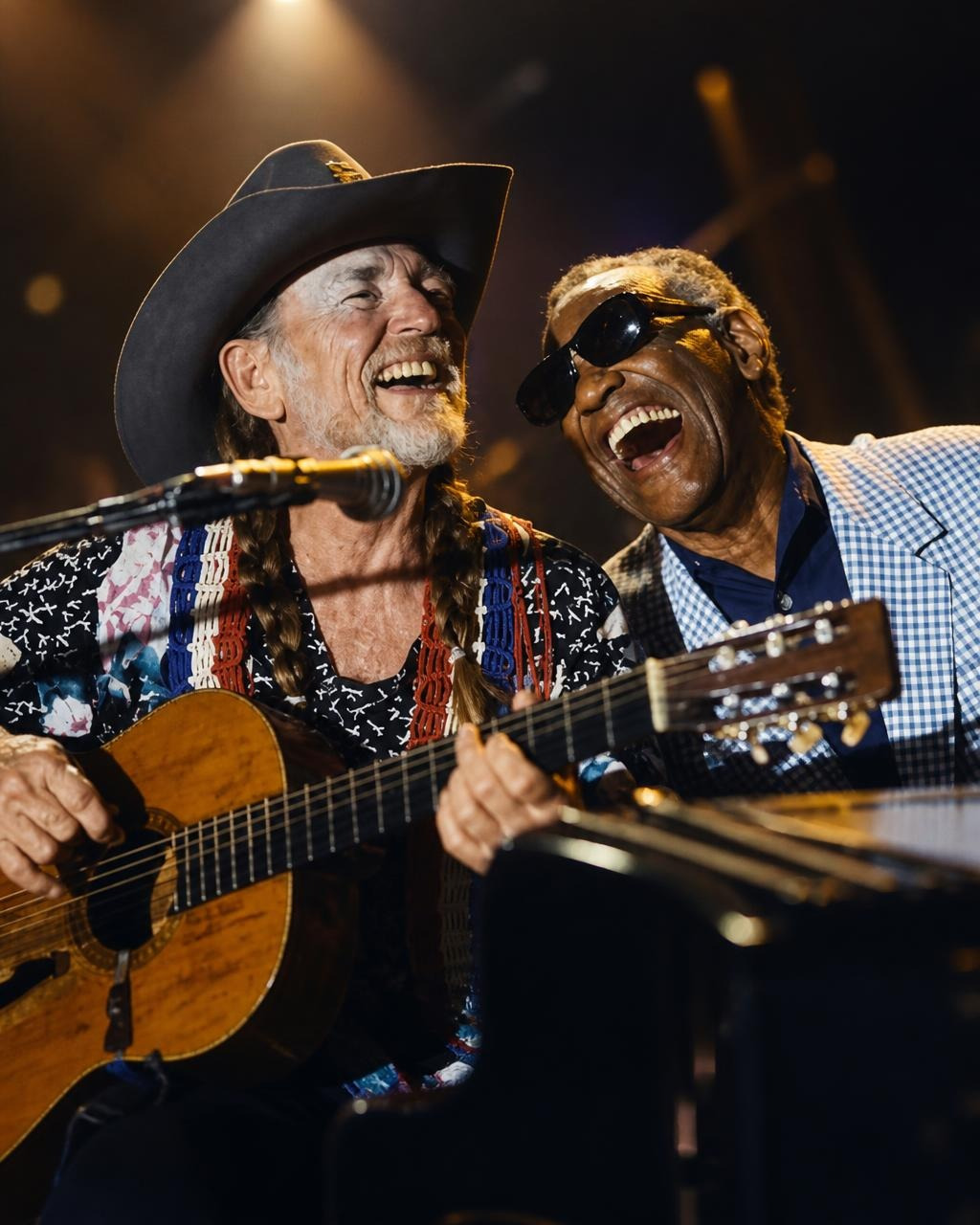
That uncertainty did not last long. Within days, the song found its way to Willie Nelson. Willie Nelson heard something in it right away and loved it. Before he could record it, producer Billy Sherrill heard the demo and decided the song belonged with Ray Charles. According to the story passed down from the session, Sherrill had first asked Ronnie Milsap, who passed. Then Billy Sherrill brought Ray Charles and Willie Nelson together on the track, and the pairing made the song feel both unexpected and inevitable.
The Missing Line That Changed Everything
There is another reason the song still invites debate. Before the recording ever rolled, Billy Sherrill cut something out of it: the part that explained the whole story. That omission left room for mystery, and mystery has a way of outliving explanation. Listeners have spent years hearing the song as a tragedy, a love story, a spiritual image, or all three at once. The song never fully settles into one meaning, and that may be why it still lingers.
What is certain is what happened next. “Seven Spanish Angels” climbed to No. 1 on the country chart dated March 23, 1985. In the same period, Ray Charles’s album Friendship was also on top of the country albums chart, giving the project a rare kind of momentum. For Ray Charles, it was a landmark moment: among the country hits he charted in his career, this was the only one that reached No. 1.
A Crossover Built on Trust
The success of “Seven Spanish Angels” says something bigger than a chart position. It showed how carefully Ray Charles could cross genre lines without losing his own identity. It also showed how country music could make room for a voice that came from somewhere else and still sound completely natural. Willie Nelson’s presence gave the song a worn-in tenderness, while Ray Charles gave it a gravity that could not be imitated.
Even now, the song feels like a meeting point: between old and new, sorrow and grace, country and soul. That is why the story behind it still gets told. The song began as a question. It ended as a No. 1 record.
Sometimes a song becomes a hit not because it answers every question, but because it leaves the right ones hanging in the air.
For Ray Charles, “Seven Spanish Angels” became the standout country achievement in a career already full of historic milestones. For everyone else, it remains a reminder that the best collaborations often start with uncertainty, then turn into something no one saw coming.