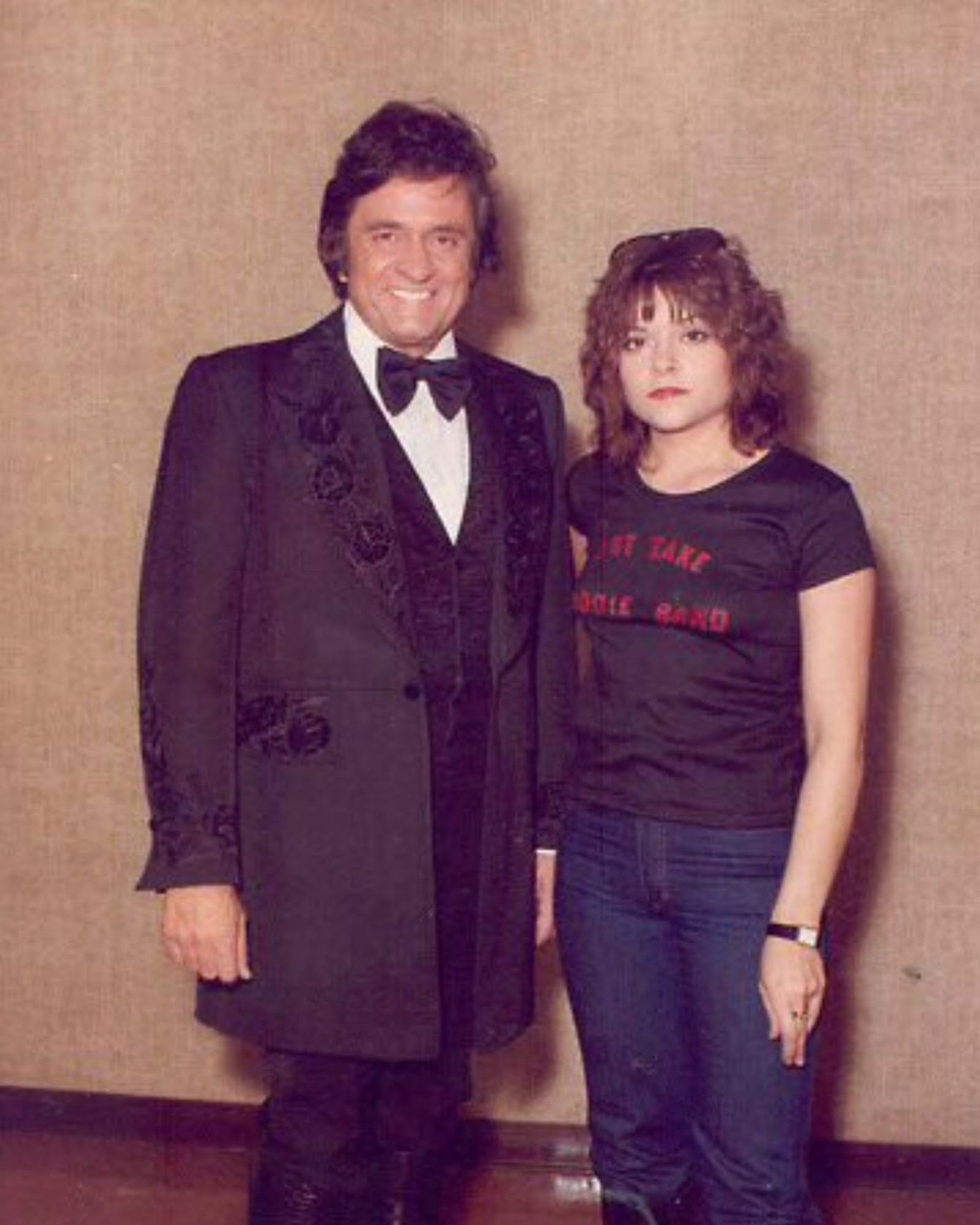
In March 2003, Rosanne Cash released a song with Johnny Cash that would take on an extraordinary meaning just six months later. The song was called “September When It Comes,” and it nearly became a solo recording.
Johnny Cash died on September 12, 2003, at the age of 71. Suddenly, a song about aging, loss, and the passage of time seemed inseparable from the final months of Johnny Cash’s life.
But the most remarkable part of the story happened before the album was released, in a small recording studio tucked away in the woods near Nashville. Years later, Rosanne Cash would describe watching Johnny Cash sing through a studio window, with tears running down Rosanne Cash’s face.
A Song Rosanne Cash Never Planned to Sing With Johnny Cash
Rosanne Cash began writing “September When It Comes” while confronting a difficult realization: Johnny Cash was growing older, and the possibility of losing a parent was becoming increasingly real.
In a 2003 interview with NPR’s Terry Gross, Rosanne Cash explained that Johnny Cash’s earlier periods of illness had prompted thoughts about mortality, family relationships, and the passage of time.
Rosanne Cash wrote the lyrics without planning a duet. According to a later interview, John Leventhal, Rosanne Cash’s husband and producer, discovered the words lying on a table at home and composed the music.
Rosanne Cash recorded the vocal alone. John Leventhal then suggested something unexpected: Johnny Cash should sing on the recording.
Rosanne Cash resisted the suggestion for months.
The hesitation had nothing to do with Johnny Cash’s musical ability. Rosanne Cash worried that inviting a world-famous father onto such a personal recording might make the collaboration appear like a publicity gimmick.
John Leventhal continued encouraging the duet, believing the song and the timing were right.
Eventually, Rosanne Cash agreed to ask.
Johnny Cash Wanted to Read the Words First
When Rosanne Cash approached Johnny Cash about appearing on the recording, the answer was not an immediate yes.
Johnny Cash wanted to read the lyrics first.
That response amused Rosanne Cash, but it also revealed something important about Johnny Cash as a performer. Even when recording with family, Johnny Cash wanted to know that the words expressed something authentic.
After reading the lyrics, Johnny Cash agreed to participate.
There was no elaborate discussion about the song’s deeper meaning. In a 2024 interview with The Line of Best Fit, Rosanne Cash recalled that Johnny Cash understood the material without needing to analyze every line.
The decision gave Rosanne Cash and Johnny Cash an opportunity to record together at a particularly meaningful point in their lives.
The Morning Johnny Cash Insisted on Recording
Rosanne Cash had already recorded the original vocal in New York. Because Johnny Cash was not well, Rosanne Cash traveled to Nashville to record the additional part.
On the morning of the session, Johnny Cash was feeling unwell.
Rosanne Cash offered to cancel the recording rather than ask Johnny Cash to continue under difficult circumstances.
But Johnny Cash insisted on going ahead.
The recording took place in Johnny Cash’s own studio, a small building in the woods near home. Rosanne Cash later recalled standing behind the studio glass, watching Johnny Cash perform.
As the familiar voice filled the recording room, tears rolled down Rosanne Cash’s face.
When the performance was finished, Johnny Cash offered to record the vocal again if John Leventhal thought another take was necessary.
Rosanne Cash believed the performance was already good enough.
That intimate account, shared publicly many years afterward, reveals something a finished recording cannot fully communicate: the care Johnny Cash brought to the song and the emotions Rosanne Cash experienced while witnessing the session.
September Arrived Six Months After the Album
“September When It Comes” appeared on Rosanne Cash’s album “Rules of Travel,” released March 25, 2003.
June Carter Cash died on May 15. Johnny Cash followed less than four months later, on September 12.
On September 15, more than 1,000 mourners gathered at First Baptist Church in Hendersonville, Tennessee, to remember Johnny Cash. It was the same church where the family had gathered to mourn June Carter Cash.
Among the mourners were Kris Kristofferson, George Jones, Vince Gill, and many others whose lives had intersected with Johnny Cash’s remarkable career.
Rosanne Cash offered one of the most personal tributes of the service. While the world could preserve Johnny Cash through recordings and memories, losing a father was something entirely different.
“I cannot begin to imagine a world without Daddy.”
Years later, Rosanne Cash recalled that former Vice President Al Gore had also referred to “September When It Comes” during the funeral service.
The Recording That Became a Family Treasure
Rosanne Cash has spoken openly about how difficult “September When It Comes” can be to perform alone. The song carries memories of Johnny Cash, but also of a collaboration involving John Leventhal and a moment in family history that cannot be repeated.
The recording was never intended as a prediction of Johnny Cash’s death. Its connection to September became meaningful because of what happened after the music was completed.
For generations of listeners, Johnny Cash remains the unforgettable voice behind “I Walk the Line,” “Ring of Fire,” and “Folsom Prison Blues.”
For Rosanne Cash, another recording holds a more personal history: a song that almost remained a solo performance, a father who wanted to read the words before singing, and a morning behind the studio glass that Rosanne Cash would never forget.
Sometimes the greatest value of an old recording lies not only in the music, but in the moments that made the recording possible.