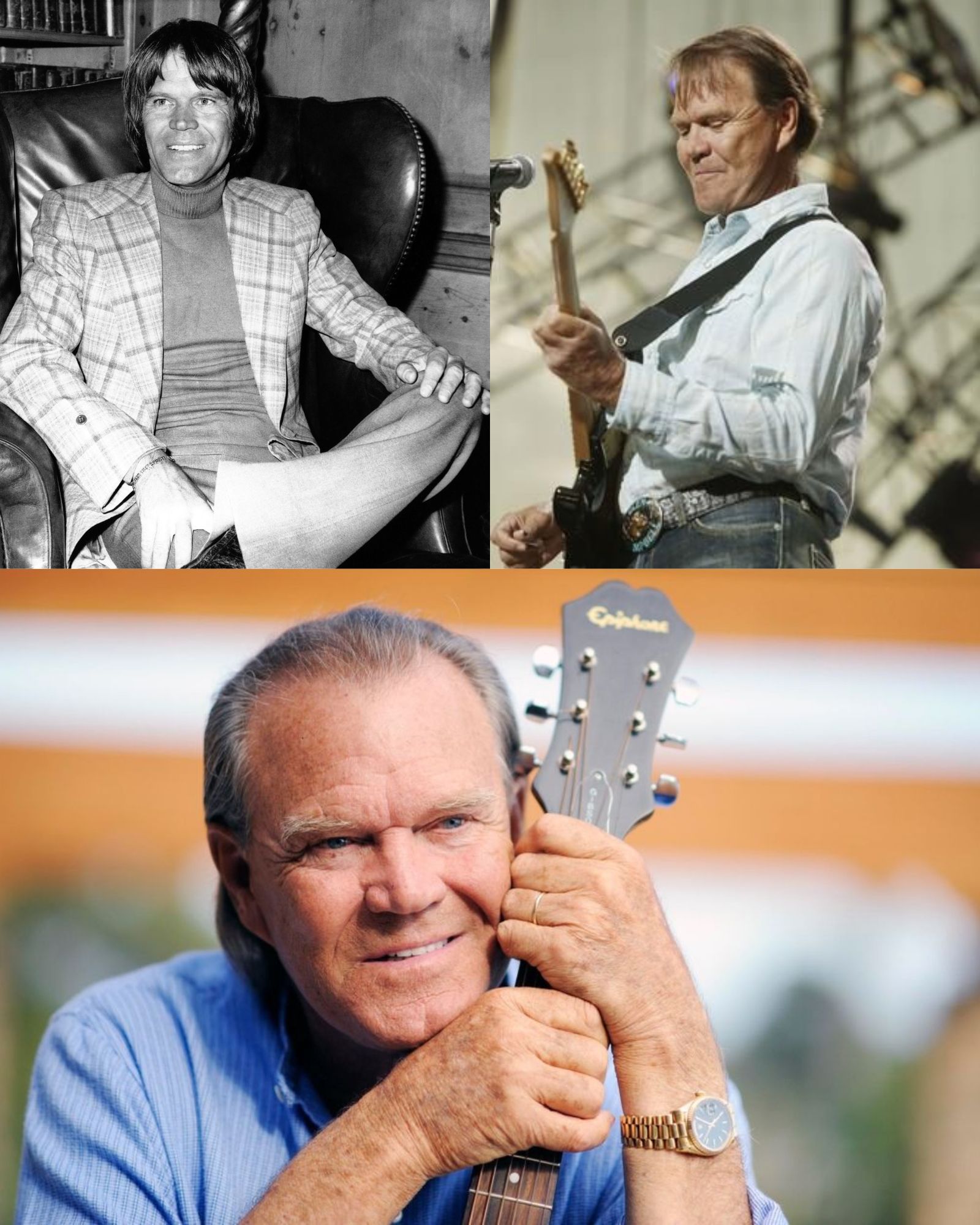
On August 9, 2017, just one day after Glen Campbell died in Nashville, his family buried him in a small cemetery in rural Arkansas. The public would not learn that the burial had already taken place until the following day.
There was no grand public farewell at the graveside. No arena filled with thousands of fans. Instead, the man who had spent decades entertaining millions was laid to rest in a private family ceremony at the Campbell Family Cemetery in Billstown, Arkansas.
Glen Campbell was 81 years old. After a remarkable career that had taken Glen Campbell from a small farming community to some of the world’s biggest stages, the final journey led back to the place where Glen Campbell’s story began.
From a Small Arkansas Community to Country Music History
Glen Travis Campbell was born on April 22, 1936, in Billstown, a rural community near Delight, Arkansas. Glen Campbell was one of twelve children born to John Wesley Campbell and Carrie Dell Stone Campbell, a farming family with little money but a strong musical tradition.
Glen Campbell learned guitar as a child and eventually left Arkansas to pursue music. By the early 1960s, Glen Campbell was working as a session musician in Los Angeles, playing on recordings associated with artists including Frank Sinatra, Elvis Presley, and the Beach Boys.
For a time, Glen Campbell also toured with the Beach Boys, filling in for Brian Wilson.
Then came Glen Campbell’s own success.
Gentle on My Mind, By the Time I Get to Phoenix, and Wichita Lineman established Glen Campbell as one of country music’s most distinctive voices. In 1975, Rhinestone Cowboy became a crossover sensation, reaching No. 1 on both the country and pop charts.
Glen Campbell earned six Grammy Awards, hosted The Glen Campbell Goodtime Hour, appeared alongside John Wayne in True Grit, and entered the Country Music Hall of Fame in 2005.
Yet the family cemetery in Billstown remained connected to the life Glen Campbell had lived long before the fame.
The Funeral the Public Learned About Afterward
Glen Campbell died on August 8, 2017, in Nashville, Tennessee. The family publicly announced Glen Campbell’s death that same day.
On Wednesday, August 9, Glen Campbell was buried at the Campbell Family Cemetery in Billstown. The following day, the family shared another message through Glen Campbell’s official Facebook page, thanking fans for their overwhelming love and support and confirming that the private burial had already taken place.
The choice of Billstown carried particular meaning. Glen Campbell’s parents and other relatives were buried in the same cemetery.
Only days after the funeral, Arkansas writer Rex Nelson visited the cemetery with Paul Austin. Nelson later described discovering the freshly dug grave just behind the headstone of Glen Campbell’s parents.
At the head of the grave was a floral arrangement bearing a ribbon that read “Brother.” A vase of roses stood at the foot.
It was a small, personal detail, far removed from the awards, television cameras, and concert halls that had defined Glen Campbell’s public life.
One Year Later, the Family Returned With a Song
The story of Glen Campbell’s resting place did not end with the 2017 burial.
On August 1, 2018, nearly a year after Glen Campbell’s death, family members gathered again at the cemetery in Billstown for the placement of Glen Campbell’s headstone.
Glen Campbell’s widow, daughter, brothers, sisters, and other relatives attended the quiet occasion.
According to a local newspaper report, Glen Campbell’s sister Jane Rather suggested that the family sing Amazing Grace. The relatives joined together in the familiar hymn.
Glen Campbell’s nephew Steve Campbell, who attended the gathering, later spoke about the headstone, which had been prepared in Memphis, Tennessee. The family was pleased with the finished memorial.
The August 2018 gathering was separate from the original funeral. It was another private moment for a family that had chosen to remember Glen Campbell close to home.
Back Where the Story Began
Glen Campbell’s music had carried the sound of Arkansas far beyond the state line. Generations knew Glen Campbell through records, television performances, and songs that remained familiar long after their original release.
But in Billstown, the final resting place tells a quieter part of the story.
Glen Campbell was buried near John Wesley Campbell and Carrie Dell Stone Campbell, the parents who raised a boy who would become one of America’s most celebrated musicians.
And when the family returned the following year, the occasion was marked not by another hit record or an elaborate production, but by relatives singing Amazing Grace together.
The voice that had reached millions around the world was finally remembered in the small Arkansas community where Glen Campbell first learned to sing.