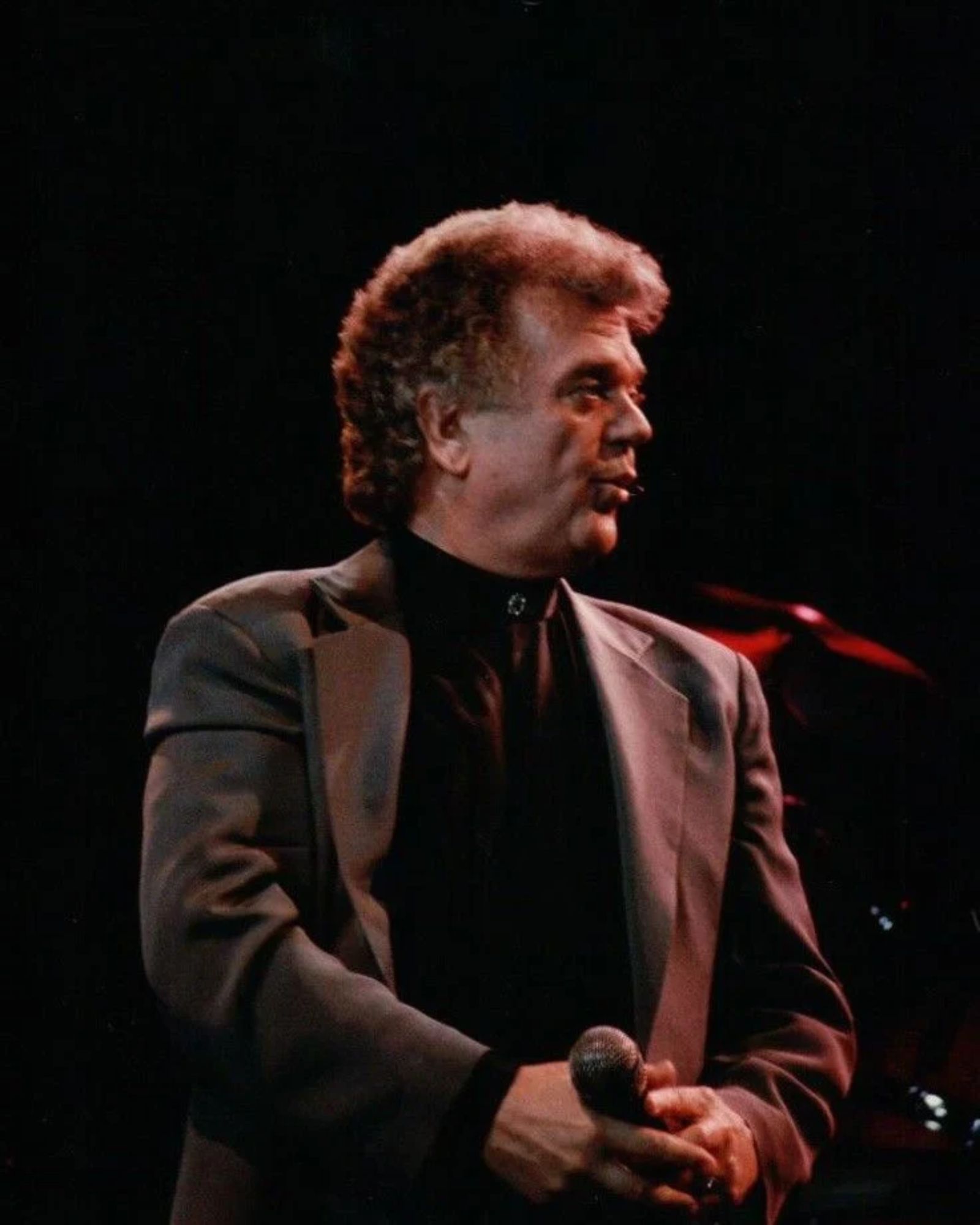
At a Conway Twitty concert in California, a woman suffering a heart attack reportedly refused to leave for the hospital until she heard one particular song.
That song was “Hello Darlin’.”
According to Conway Twitty’s official biography, paramedics were urging the woman to accompany them for medical attention. But she insisted on staying until she heard the song she had come to hear.
Someone passed a note to the stage explaining the situation.
When Conway Twitty learned what was happening, the country music legend made a simple decision. Conway Twitty changed the order of the concert and performed “Hello Darlin’” earlier than planned, allowing the woman to hear her favorite song and leave for medical care.
It was a small change to a concert, but it became one of the stories preserved in Conway Twitty’s official biography.
Why “Hello Darlin’” Meant So Much to Conway Twitty’s Fans
To understand why a fan would be so determined to hear that particular song, it helps to understand the history behind “Hello Darlin’.”
Conway Twitty wrote the song around 1960, long before it became one of the most recognizable recordings in country music.
At the time, Conway Twitty was better known for rock and roll, having already scored a major pop hit with “It’s Only Make Believe.” The country song remained unused for years.
When Conway Twitty eventually brought the composition to producer Owen Bradley, one small suggestion helped transform it.
Instead of singing the opening words, Owen Bradley suggested that Conway Twitty speak them.
Those two words, delivered in Conway Twitty’s unmistakable deep voice, became an introduction that generations of country fans could recognize immediately.
Released in 1970, “Hello Darlin’” reached No. 1 on Billboard’s country singles chart and remained there for four weeks.
The song became so closely associated with Conway Twitty that it was regularly used to open concerts. For fans, hearing that familiar greeting was one of the defining pleasures of a Conway Twitty performance.
A Singer Who Let the Music Do the Talking
Conway Twitty approached live performances differently from many entertainers.
Instead of filling concerts with long speeches or jokes, Conway Twitty preferred moving from one song to another, allowing the lyrics and performances to create a connection with the audience.
In the official biography, Conway Twitty explained that music was the way the singer communicated with fans.
That connection was especially powerful with the many women who followed Conway Twitty’s career. Songs about love, heartbreak, regret, and relationships became the foundation of an extraordinarily loyal audience.
“Hello Darlin’” was perhaps the clearest example.
The recording did not need elaborate production or a dramatic introduction. Conway Twitty could say two familiar words, and audiences already knew what was coming.
That helps explain the attachment behind the unusual incident at the California concert.
One Request That Changed the Concert
The woman’s refusal to leave for medical attention created a serious situation. Prompt treatment was more important than finishing a concert, and Conway Twitty’s response offered a practical way to help the woman leave sooner.
Rather than allowing the situation to continue, Conway Twitty adjusted the performance so the woman could hear “Hello Darlin’” without remaining for the rest of the show.
The official account does not identify the woman, give the exact concert date, or describe what happened after she left for medical care. No independent contemporary report has been established to confirm every detail of the incident.
What the family biography preserves is Conway Twitty’s decision to respond to a fan’s request during a medical emergency.
The Kind of Moment Fans Remember
Conway Twitty died on June 5, 1993, but “Hello Darlin’” remains one of the recordings most closely connected with the singer’s legacy.
For many longtime country music listeners, the song brings back memories of old records, radio broadcasts, and concerts attended decades ago.
The California incident offers another perspective on that connection.
A woman was determined to hear a beloved song. Conway Twitty received word of the situation and changed the concert so she could leave for medical care.
There is no documented dramatic reunion or final conversation to add to the story.
Just a performer, a fan, and a familiar song that meant enough to bring about an unexpected change in the evening’s program.
And sometimes, a moment that simple is worth remembering.