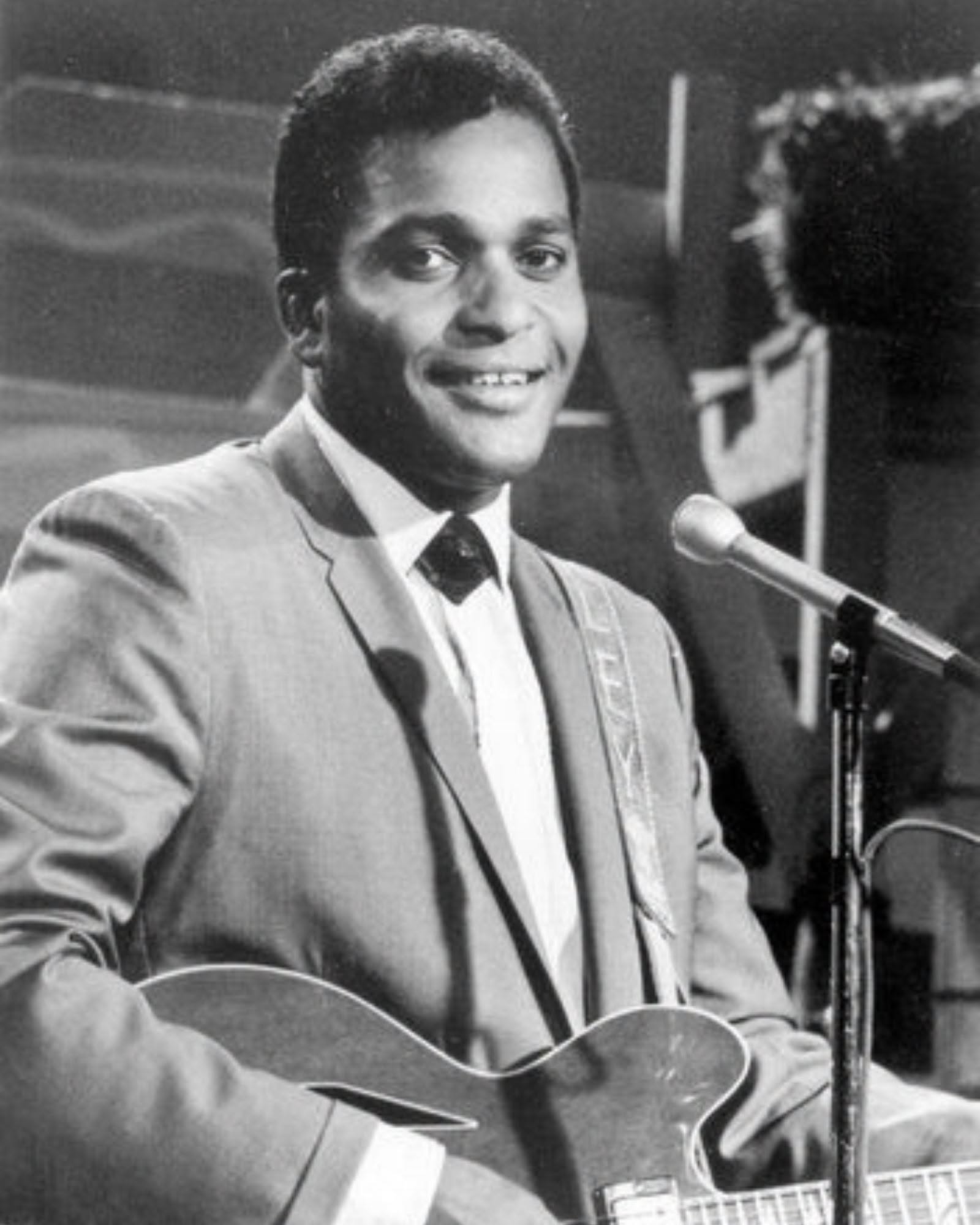
On January 7, 1967, Charley Pride stepped onto the stage of Nashville’s Ryman Auditorium for a performance that would become part of country music history.
Ernest Tubb, one of the Grand Ole Opry’s most respected stars, introduced Charley Pride to the audience. For Charley Pride, the moment carried a special connection to a childhood spent listening to country music in rural Mississippi.
Charley Pride became the first Black solo singer to perform on the Grand Ole Opry. Yet another remarkable chapter of the story was still ahead. Despite receiving an invitation to join the famous institution, Charley Pride would wait 26 years before accepting membership.
From a Mississippi Cotton Farm to the Ryman Auditorium
Charley Pride grew up in Sledge, Mississippi, the son of a sharecropper. Music was an important part of family life, especially on Saturday nights when Charley Pride’s father tuned the family’s Philco radio to WSM in Nashville.
Through those broadcasts, Charley Pride became familiar with Roy Acuff, Hank Williams, Ernest Tubb, and other country performers. At fourteen, Charley Pride bought a guitar from a Sears Roebuck catalog and learned by listening to the music coming through that radio.
Baseball initially offered another possible future. Charley Pride played professionally in the Negro leagues and minor leagues before finding a path into the recording business. By 1966, Charley Pride had signed with RCA Records, with Chet Atkins supporting the young singer’s career.
Then came the invitation to perform on the Grand Ole Opry.
The Night Ernest Tubb Introduced Charley Pride
On January 7, 1967, Ernest Tubb welcomed Charley Pride during the Grand Ole Opry broadcast. Charley Pride performed “The Snakes Crawl at Night,” an early RCA recording.
Later that evening, Charley Pride returned to sing the Hank Williams classic “I Can’t Help It (If I’m Still in Love with You).”
The performance represented an important milestone in an institution with a complicated racial history. Harmonica virtuoso DeFord Bailey had performed on the Opry decades earlier, but Charley Pride was the first Black solo vocalist to appear on its stage.
The personal connection was equally striking. Ernest Tubb had once been a familiar voice coming through the radio in the Pride household. Now Ernest Tubb was introducing Charley Pride to a national country music audience.
Why Charley Pride Said No to Membership
Charley Pride subsequently had a standing invitation to become a Grand Ole Opry member. For many country singers, membership represented one of the highest honors in the business.
But Charley Pride declined.
The reason was not a disagreement with the Opry or a lack of appreciation for its traditions. It was a practical decision involving the economics of a touring musician’s career.
At the time, Opry membership required performers to appear on 26 Saturdays each year. Fridays and Saturdays were also the most profitable nights for artists traveling across the country to perform.
Accepting membership would have meant giving up a substantial number of those opportunities just as Charley Pride’s career was beginning to grow.
Charley Pride later explained the decision plainly:
“It was purely an economical decision for me.”
The financial stakes were significant. In a later interview, Charley Pride remembered earning roughly $100 to $200 for some early road performances and only a small royalty on each RCA single. Regular weekend concerts mattered.
Meanwhile, Charley Pride’s career flourished. “Just Between You and Me” became a major hit in 1967. More chart successes followed, including “Is Anybody Goin’ to San Antone” and “Kiss an Angel Good Mornin’.” In 1971, Charley Pride won the Country Music Association’s Entertainer of the Year award.
May 1, 1993: Finally Becoming an Opry Member
On May 1, 1993, Charley Pride officially joined the Grand Ole Opry, 26 years after the historic debut at the Ryman Auditorium.
During the induction-night program, Charley Pride performed songs including “Kiss an Angel Good Mornin’,” “Wings of a Dove,” and “Kaw-Liga.” Fellow Opry member Jimmy C. Newman hosted the segment.
For Charley Pride, membership meant more than another professional distinction. In a later interview, Charley Pride described becoming an Opry member as joining a family of performers whose music had shaped country music across generations.
That was the remarkable conclusion to a story that began with a Philco radio on a Mississippi cotton farm. Charley Pride had grown up listening to the Grand Ole Opry, made history on its stage in 1967, and eventually accepted a place among its members in 1993.
The 26-year delay was never about turning away from country music’s traditions. It was about building a career on terms that made financial sense, while keeping the door open to an institution Charley Pride had admired since childhood.