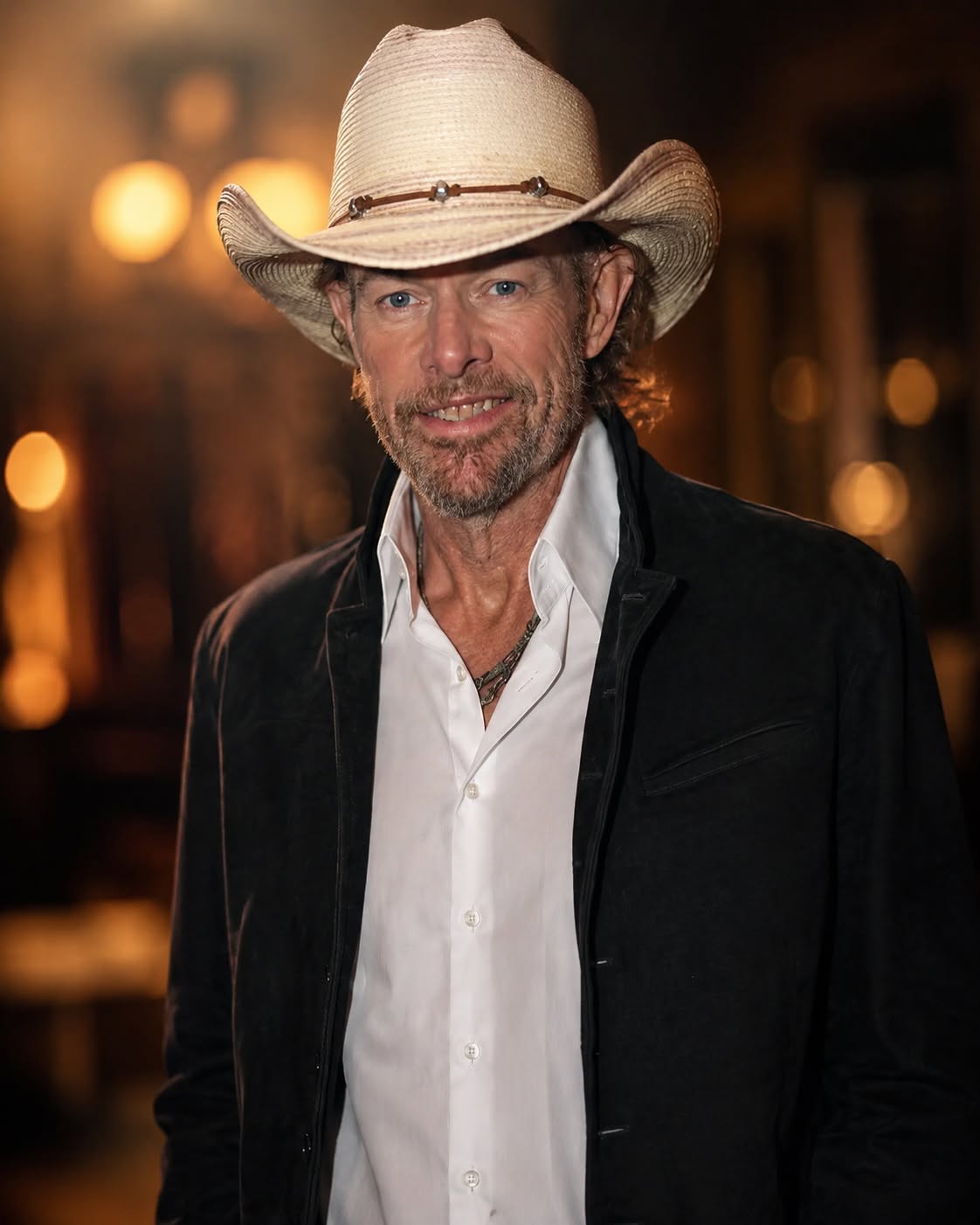
The Oklahoma Story of Toby Keith: A Life Built Loud, Then Returned Home
He died on a Monday in Norman, Oklahoma, and the news landed with the weight of a whole career coming to rest at once. Toby Keith was 62. He had been fighting cancer for more than two years, and when the end came, he was back in the state that shaped him. He was later buried at Sunset Memorial Park — an Oklahoma boy put back in Oklahoma dirt.
That ending fits the beginning. Toby Keith came from Clinton, Oklahoma, and he carried the old, hard-working pieces of that life into everything he did. Before the lights, before the arena singalongs, before the radio hits, he was a rodeo hand, an oil field roughneck, and a defensive end for a semi-pro football team. He knew labor. He knew dust. He knew how to keep going when the day got long.
From local grit to national fame
When the rigs slowed down, Toby Keith picked up a guitar and headed to Nashville. The rise was fast enough to feel unreal. “Should’ve Been a Cowboy” shot to number one and made it clear that his voice had arrived with purpose. More hit singles followed. So did millions of records sold. In a business full of handlers and filters, Toby Keith stayed stubbornly direct.
He wrote songs that made people cheer, argue, and remember where they stood. After 9/11, he released “Courtesy of the Red, White and Blue,” and the reaction split the country wide open. Toby Keith did not seem interested in pleasing everybody. He was interested in saying what he believed and standing in the noise that followed.
More than a stage persona
Behind the headlines, Toby Keith kept working. He played USO tours for years, bringing music to service members far from home. He also gave time and money to children facing cancer, helping build the OK Kids Korral in Oklahoma City, a place designed to support families during some of their hardest days.
Some artists build a catalog. Toby Keith built a world around his songs — one made of loyalty, sharp edges, and plainspoken pride.
In December 2023, Toby Keith played his final shows in Las Vegas, and the performances sold out. Fans who were there heard a man still fighting to sound like himself, still reaching for the crowd, still refusing to disappear quietly. Then he went home to Oklahoma.
A farewell that matched the life
His death closed a chapter that had already become part of country music history. The kid from Clinton became a star, but he never quite stopped sounding like the kid from Clinton. That may be why so many people felt the loss personally. Toby Keith was not polished into softness. He was built from rough edges, conviction, and the kind of confidence that comes from surviving a hard life before fame ever enters the picture.
In the end, the story returned to the place where it began. Oklahoma gave Toby Keith his first lessons, his first identity, and his final resting place. That circle feels simple, but it is not small. It is the last line of a life that was loud, complicated, beloved, and unmistakably his.